By Victor Fanuel
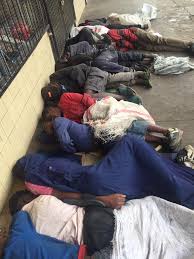
HARARE — Harare residents are raising alarm over the growing number of homeless people sleeping on the streets of the capital’s central business district (CBD), saying the situation has fuelled rising crime and accelerated the deterioration of the capital’s urban environment.
The Harare Residents Trust (HRT) warns that the trend exposes deepening failures in Zimbabwe’s social protection system, prompting renewed calls for authorities to tackle both insecurity and homelessness through long-term social interventions rather than police and municipal crackdowns alone.
HRT director Precious Shumba, in an interview, said homelessness should be treated as a national social policy emergency requiring coordinated intervention from central government, the City of Harare, civil society organisations and the private sector.
“The issue of homeless people strikes at the heart of our social security policies as a country.
“Society has failed to address the issue of people without shelter,” Shumba said.
The concerns come amid mounting complaints over deteriorating sanitation, rising insecurity, vandalism of public infrastructure, blocked drainage systems, illegal commercial activities and the declining state of social amenities in the city centre.
Residents say people sleeping on pavements, footbridges, traffic islands and shop verandas have become increasingly visible across the CBD, particularly around Town House, Julius Nyerere Way, Robert Mugabe Road, Rezende Street and other busy public spaces.
Some residents allege that homeless people commonly referred to locally as “zvigunduru” contribute to littering and poor sanitation by occupying public spaces, storing personal belongings in drainage systems and leaving refuse in pedestrian walkways.
Others have also raised concerns over blocked storm-water drains, claiming some homeless people tamper with water valves to access water, contributing to damage to municipal infrastructure and increasing maintenance costs for the cash-strapped local authority.
Residents have further called on the City of Harare to strengthen enforcement of municipal by-laws by prohibiting vehicle washing in undesignated public spaces, particularly parking bays and roadside areas in the CBD, arguing that the practice contributes to blocked drains, water wastage, environmental pollution and deteriorating urban hygiene.
Harare’s CBD continues to battle recurring challenges of refuse collection, blocked drainage systems and ageing public infrastructure that have affected the quality of social amenities and the overall appearance of Zimbabwe’s capital.
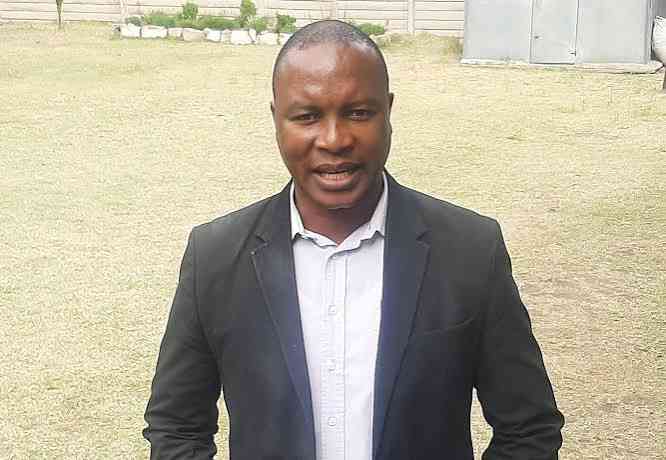
Shumba, drawing parallels with traditional community support systems, said Zimbabwe had abandoned the values of collective responsibility embodied in the “Zunde raMambo” concept, where communities pooled resources to care for widows, orphans, travellers and other vulnerable people.
“The problem in today’s central business district of Harare is not peculiar to Harare but is prevalent across the country.
“People living on the streets need urgent attention as a public policy intervention, and not just for the convenience of a few disgruntled residents going about their business in town,” said Shumba.
Rather than relying solely on police operations to remove people from the streets, Shumba proposed that the City of Harare establish vocational training centres across its five administrative districts to equip homeless people with practical income-generating skills.
He said council should allocate part of its annual budget to rehabilitation programmes while mobilising financial and technical support from the private sector.
“It is a collective societal problem that needs to be tackled in a holistic and progressive manner,” he said.
The residents’ organisation said while Harare residents have legitimate concerns over public safety, environmental degradation and cleanliness in the CBD, authorities must ensure that any intervention respects the dignity and human rights of vulnerable people.
HRT called for the ministries responsible for social welfare, health, policing and local government to work together to identify, rehabilitate and reintegrate people living on the streets through sustainable social protection programmes instead of relying primarily on enforcement operations.
The residents’ association also urged the City of Harare to strengthen the protection of public infrastructure by prosecuting individuals responsible for vandalising drainage systems, water infrastructure and other public assets.
Concerns raised by Harare residents mirror responsibilities already assigned to public institutions.
The Department of Social Development, under the Ministry of Public Service, Labour and Social Welfare, is mandated to provide social protection services to vulnerable groups, including programmes targeting children living and working on the streets through rescue, rehabilitation, family tracing and reintegration.
Similarly, the City of Harare’s Social Services Division, under the Housing and Community Services Department, is responsible for promoting the welfare of marginalised and vulnerable residents through various community development initiatives.
The persistence of homelessness in the capital has nevertheless raised questions about the effectiveness and scale of existing interventions, with residents increasingly asking whether social welfare programmes have sufficient resources to address worsening urban poverty.
These challenges are not new.
In 2017, government announced a joint initiative with civil society organisations to remove thousands of children from the streets of Harare and other major towns for rehabilitation, acknowledging that homelessness had become a long-term national policy challenge.
Nearly a decade later, many residents say the number of people sleeping in public spaces appears to have grown as economic hardship, unemployment and the cost-of-living crisis continue to push more vulnerable people onto the streets.
The debate has also unfolded against a backdrop of concerns over crime and public safety in the capital.
The Zimbabwe Republic Police has repeatedly identified robbery, theft and assaults among offences affecting urban centres, with police regularly urging members of the public to avoid walking alone at night and to remain vigilant in the CBD.
Human rights organisations, however, have consistently argued that homelessness should not be equated with criminality, warning against the stigmatisation of vulnerable people and calling for rights-based responses that distinguish between offenders and those simply in need of social assistance.
For many Harare residents, the growing visibility of people sleeping on pavements, begging at busy intersections and occupying public spaces has become a symbol of deteriorating social welfare systems, declining urban services and widening inequality.
Shumba said the solution lay not in simply removing vulnerable people from public view, but in rebuilding pathways that enable them to become economically self-sufficient.
“Skilled people may struggle like the rest of the population, but they can survive, which gives them agency to make independent economic decisions,” he said.
Ultimately, residents say restoring Harare’s cleanliness, protecting public infrastructure and improving safety in the CBD will require more than enforcement operations.
They argue that sustainable improvements will depend on stronger social protection programmes, investment in social amenities, effective rehabilitation services and coordinated action by central government, local authorities, civil society and the private sector.