By Marshall Bwanya
HARARE — Zimbabwe’s worsening water pollution crisis has come under renewed scrutiny, with lawmakers hearing evidence on the environmental impact of mining activities as civil society organizations call for urgent reforms to protect the country’s water resources.
The renewed focus comes after the Zimbabwe United Residents and Ratepayers Alliance (ZURRA) issued a statement on Monday warning that water pollution has become one of the greatest threats to Zimbabwe’s water security, driven largely by unsustainable mining and industrial practices across the country’s seven catchment areas.
The residents’ body said deteriorating water quality in major river systems and dams poses risks not only to public health but also to regional water security, urging Parliament to fast-track reforms to Zimbabwe’s water and environmental laws.
“We agree that economic development is essential for Zimbabwe’s growth and prosperity.
“However, we cannot sacrifice the environment that provides us with water at the expense of the economy,” ZURRA said in its statement.
The organization further called for stronger enforcement against mining and industrial polluters, restoration of degraded water bodies, greater investment in wastewater treatment infrastructure and increased community participation in environmental governance.
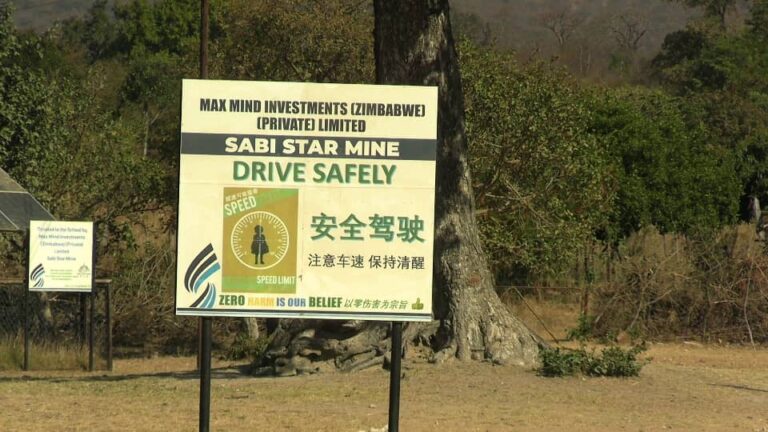
The statement comes as Parliament continues examining a petition concerning environmental complaints against Chinese-owned Sabi Star Mine in Buhera, where residents have accused the lithium producer of causing severe dust pollution, environmental degradation and adverse health impacts.
The Portfolio Committee on Environment, Climate, Wildlife and Tourism recently heard oral submissions from representatives of Sabi Star Mine.
During the proceedings, the Chinese delegation representing the company reportedly stated that they could not speak English and requested the services of a translator.
However, independent investigations by NewsHour allege that some Chinese nationals use a similar approach when entering Zimbabwe through Robert Mugabe International Airport.
According to the investigation, some individuals reportedly declare that they cannot communicate in English while undergoing immigration processes and are subsequently placed under the supervision of officials from the Chinese Embassy.
The investigation further alleges that they are then coached on how to respond to questioning in ways that facilitate their entry into the country.
These allegations have not been independently verified by Parliament or immigration authorities, and no official response from the Chinese Embassy was available at the time of publication.
The parliamentary hearing sparked criticism from some observers, who interpreted the delegation’s request for a translator as dismissive of the committee’s proceedings.
However, Portfolio Committee chairperson Sam Matema rejected suggestions that the Sabi Star delegation had displayed arrogance, saying the committee’s work was guided by evidence rather than perception.
“It captured in the written submissions. What we do as a committee, we receive oral evidence from the petitioner.
“We receive oral evidence from the accused, for a lack of a better term, after that we go on the ground to reconcile the two positions and we depart from a point of evidence,” said Matema.
“So that is the next round.
“We will be going on a date to be agreed to Sabi Star with that petition in hand.
“We meet the locals and relevant stakeholders and receive their submissions as well,” added Matema.
The committee is expected to conduct a fact-finding visit to Buhera where legislators will engage affected communities, local authorities and the mining company before compiling their findings and recommendations.
The parliamentary inquiry builds on concerns that have persisted for more than a year over the environmental impact of lithium mining in Mukwasi Village, where residents have consistently complained about dust pollution from ore-hauling trucks, deteriorating air quality, declining agricultural productivity and increasing respiratory illnesses.
Previous investigations by NewsHour documented how villagers living along the 37-kilometre haulage route accused the mine of failing to adequately suppress dust despite repeated promises to improve road infrastructure.
Last year Buhera North MP Philip Guyo
accused Sabi Star which operates operated by Chinese-owned Maxi Mind of showing little regard for the welfare of local communities.
“When I went into office, I engaged the mine over dust issues, and the manager even appeared on national TV promising that within a week they would construct a road linking the mine to the highway. That never happened.
“When I followed up, I was told the directors had changed and the tarred road was no longer part of their plans,” he said.
Guyo said despite efforts to engage the company through the District Coordinating Committee (DCC), the mine has remained uncooperative.
“These residents never imagined such a business would emerge here, and now the Chinese investors want to do things their own way.
“We’ve tried every possible channel, but at the moment there is no sign of assistance.
“Since I took over from the former MP, we have been engaging them, but now they don’t even want to meet with us,” added Guyo.
Community leaders alleged that crops, homes and water sources continue to be blanketed by dust while residents report growing cases of chest infections and other respiratory conditions.
Environmental campaigners argue that the challenges at Sabi Star reflect broader governance failures within Zimbabwe’s rapidly expanding mining sector, where economic growth has frequently outpaced environmental regulation and enforcement.
ZURRA said the fragmentation of Zimbabwe’s water governance institutions has weakened accountability and delayed effective responses to pollution incidents, warning that continued degradation of rivers and dams could have long-term consequences for communities and regional stability.