By Victor Fanuel
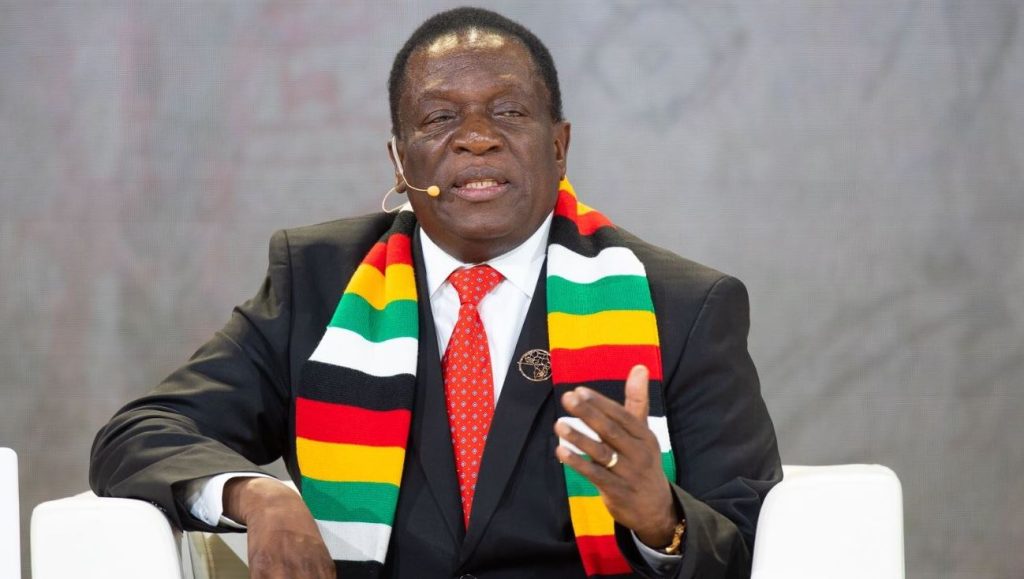
HARARE — President Emmerson Mnangagwa has signed the Constitution of Zimbabwe Amendment (No. 3) Act, 2026 into law, ushering in sweeping constitutional changes that fundamentally alter how Zimbabwe elects its President, extend presidential and parliamentary terms from five to seven years, and restructure key electoral and judicial institutions.
The new law, published as Act No. 6 of 2026, replaces Zimbabwe’s direct presidential election with an indirect system under which the Head of State will now be elected by Members of Parliament sitting jointly.
The Act provides that: “The President must be elected by the members of Parliament in a joint sitting of the Senate and the National Assembly.”
Under the new Section 92, the presidential election must take place after Members of Parliament have been sworn in and after the election of the Speaker of the National Assembly and the President of the Senate following every general election.
A candidate must secure more than half of the valid votes cast by MPs to be elected.
Where no candidate obtains an outright majority, the law states that “a run-off ballot must be held between the two candidates with the highest number of votes and the candidate receiving the majority in the run-off is declared elected as President.”
The Zimbabwe Electoral Commission (ZEC) will continue to administer the election in accordance with electoral laws and Standing Orders, although several of its previous constitutional functions have been transferred elsewhere.
Presidential, parliamentary terms extended
Among the most significant amendments is the extension of the presidential term from five years to seven years.
Section 95 now replaces the previous constitutional provision by substituting “five years” with “seven years” and further states:
“Notwithstanding section 328(7), subsection (2)(b) shall apply to the continuation in office of the President.”
Parliament will also serve seven-year terms instead of five.
Section 143 now refers to a “seven-year term” and similarly provides:
“Notwithstanding section 328(7), subsection (1) shall apply to the continuation in office of the Senate and National Assembly.”
Consequently, general elections will now be held 30 days before the expiry of the seven-year parliamentary term, replacing the previous five-year electoral cycle.
New succession rules
The amendment also changes how presidential vacancies are handled.
Rather than a Vice-President automatically completing the remainder of a presidential term, the Vice-President will only act as President until Parliament elects a new Head of State.
The new Section 101 states:
“If the person elected as President dies, resigns, or is removed from office the Vice President… acts as President until a new President assumes office in terms of section 92.”
Parliament must elect a replacement President within 30 days of a vacancy occurring.
The law further bars Parliament from passing legislation introducing substantive policy changes during the period between a presidential vacancy and the election of a new President.
Registrar-General takes over voter registration
The amendment transfers responsibility for voter registration and maintenance of the voters’ roll from ZEC to the Registrar-General.
The newly inserted Section 43A provides that the Registrar-General shall:
“register voters; compile voters’ rolls and registers; [and] ensure the proper custody and maintenance of the voters’ rolls and registers.”
Senate expanded
The Act increases Senate membership from 80 to 90 senators.
Ten additional senators will be appointed by the President after consultation with the National Assembly and will be selected for their “professional skills and other competencies.”
Delimitation Commission created
The legislation also establishes a new Delimitation Commission, replacing ZEC’s constitutional role in drawing constituency and ward boundaries.
The Commission will be chaired by a Supreme Court judge, former judge, or a person qualified for appointment to the Supreme Court, alongside members with expertise in demography, cartography, governance and administration, as well as a representative from the National Council of Chiefs.
The time allowed for completing delimitation exercises has also been extended from six months to eighteen months.
Judicial restructuring
The constitutional amendment introduces a separate Judge President of the Supreme Court, with the Chief Justice remaining head of the Judiciary and responsible for the Constitutional Court.
It also expands the Constitutional Court’s jurisdiction by allowing it to hear additional matters where it grants leave on the basis that a case raises “an arguable point of law of general public importance.”
Defence Forces and independent commissions
The Act revises the constitutional mandate of the Defence Forces, stating that their function is to:
“protect Zimbabwe, its people, its national security, its interests, its territorial integrity and to uphold this Constitution.”
It also repeals the constitutional provisions establishing the National Peace and Reconciliation Commission, while removing several constitutional functions previously assigned to the Zimbabwe Electoral Commission.
Local authorities
The amendment retains proportional representation provisions for women in local authorities while introducing youth representation.
An Act of Parliament may now provide for at least 30 percent women and 10 percent youth aged between 18 and 35 in local councils through proportional representation.
The Constitution of Zimbabwe Amendment (No. 3) Act, 2026 takes immediate effect following its assent and publication, marking one of the most extensive constitutional overhauls since the adoption of the 2013 Constitution.