By Victor Fanuel
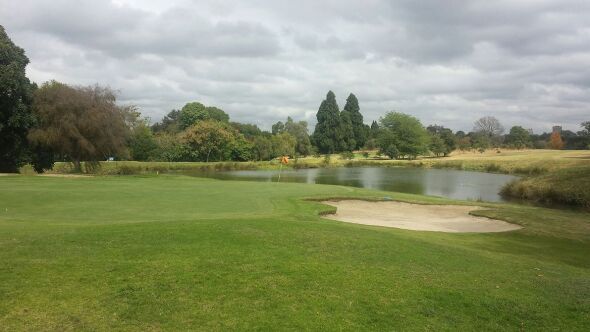
HARARE — A long-running dispute over land in Harare has erupted into a High Court battle after Falcon Golf Club accused the Air Force of Zimbabwe of forcibly taking over its premises, ripping out doors and ceilings and converting the clubhouse into what the military now calls its own golf estate.
Falcon Golf Club, which says it has occupied the Hatfield property since 1971 under a 99-year lease running to 2070, filed an urgent chamber application on September 17 seeking an order restoring its “peaceful and undisturbed” possession of the golf course, clubhouse and other improvements.
Defence Minister Oppah Muchinguri-Kashiri, Air Force commander Air Marshal John Jacob Nzvede and the Air Force of Zimbabwe are cited as the first, second and third respondents in the case, HCH 4662/26.
Club trustee Alex Elias Mashamhanda, the businessman behind Mashwede Holdings, says the military’s intervention was carried out without a court order and amounted to what he described in his founding affidavit as a “brazen hostile takeover.”
Court papers accuse Air Force officers of entering the premises on September 5, removing doors and ceilings and painting buildings in Air Force colours.
“Invaded our premises without our permission taking down doors and ceilings and started painting the 3rd respondent’s colours on to our buildings,” Mashamhanda says in the affidavit.
He says staff were told that the Air Force was taking control of the club.
The confrontation did not begin in September.
On July 6, Mashamhanda says, Air Force Group Captain Kereke telephoned him and said the military wanted to occupy the club manager’s house.
When asked to put the request in writing, Kereke allegedly did not do so.
Club officials initially believed the September intervention could not be genuine, according to Mashamhanda, because they could not believe a state security institution would remove them from premises they had occupied for decades without first obtaining a court order.
Attempts to secure a meeting with Air Force authorities failed, prompting the club to instruct lawyers on September 9.
What followed three days later has become a central part of the club’s case.
On September 12, the Air Force held the Zimbabwe Inter-Service Golf Team Championship at Falcon Golf Club, according to the court papers.
Club members were allegedly prevented from using the clubhouse and other facilities during the event.
Air Marshal Nzvede delivered the keynote address and unveiled a plaque presented as the official opening of the facility.
Photographs attached to the court papers show a plaque declaring that “this golf estate” was officially opened by the Air Force commander on September 12.
Mashamhanda says the development was particularly significant because Falcon Golf Club had never surrendered its premises.
“To add salt to the applicant’s wound,” he says, the Air Force “purported to officially open the Airforce Falcon Golf Club”.
He argues that neither the club nor its members consented to the takeover.
“The actions of the 2nd and 3rd respondent smack of a brazen hostile takeover of the premises that belong to the applicant,” Mashamhanda says.
He further alleges that the conduct amounted to the unlawful eviction of the club, its employees and members.
Court asked to restore club
Falcon has now asked the High Court to order the respondents to return possession of the clubhouse, golf course and other improvements situated on the 17 pieces of land covered by its lease.
Its application also seeks costs on the legal practitioner-and-client scale.
In its founding papers, the club says it was in “peaceful and undisturbed possession” of the property before the Air Force intervention.
The application states:
“The applicant was in peaceful and undisturbed possession of its various building structures, Golf Club House, managers club house and other amenities used for golfing by the generality of its membership.”
It goes on to allege that the Air Force and the defense ministry took occupation without a court order authorising the eviction.
“It is unlawful for the respondents to appropriate without the applicant’s consent and without compensation to the applicant for the building structures constructed by the applicant at the Falcon Golf Club,” it said.
Those allegations have not yet been tested by the court, and the respondents have been given an opportunity to oppose the application.
Lease runs until 2070
Falcon Golf Club’s claim is anchored in a 99-year lease signed on June 30, 1971 with the then Hatfield Town Council.
Court papers say the lease runs until June 29, 2070 at an annual rent of US$2 and required the club to develop the property into a golf course and associated facilities.
Mashamhanda puts the value of the improvements on the property at more than US$2 million, although he acknowledges that this is an estimate and says professional valuers have been engaged to determine the actual figure.
A 2025 High Court judgment involving a separate billboard dispute also records Falcon Golf Club as having lease arrangements with businesses operating on the club’s grounds, providing independent evidence of the club’s longstanding use of the property. (
How the military claim emerged
Much of the legal dispute turns on the government’s decision to designate the area a military cantonment.
Statutory Instrument 210 of 2025, published on December 5, declared an area in Harare known as “Falcon” a cantonment under the Defence Act.
A subsequent statutory instrument, SI 28 of 2026, amended the boundaries of the Falcon cantonment area.
Falcon Golf Club does not dispute that the government has gazetted the cantonment notices but argues that the instruments did not themselves cancel its lease, compulsorily acquire the property or provide a court order authorising its eviction.
According to the club, members continued using the course without interference until the September intervention.
The land ownership dispute had, however, been simmering for months.
In October 2025, the City of Harare allegedly accused the club of encroaching onto the Remaining Extent of Lot 227 Hatfield Township, which the council said it intended to subdivide for residential development.
Falcon says it responded twice, maintaining that the disputed land fell within its lease, but received no response.
By May this year, the council had advertised plans to rezone the land from golf course use to residential use, proposing 17 residential stands measuring 2,000 square metres each, according to the club’s court papers.
Air Force claims ownership
The military subsequently published a newspaper notice asserting that it had “always been the lawful owner” of the property.
According to Falcon’s court papers, the notice described the land as a military camp held on behalf of the state and warned members of the public against buying or selling stands on the property.
In July, the ministry of local government
reportedly directed the City of Harare to withdraw its rezoning application.
That left the club facing competing claims involving the local authority, the military and its own long-term lease.
Falcon’s position is that even if the Air Force ultimately establishes ownership of the land, it could not simply remove an existing occupier without following the law.
Mashamhanda further argues that the club would retain an improvement lien over structures it constructed on the property.
‘Law into their own hands’
In a certificate of urgency, Falcon’s lawyer Edson Nyasha Matsanura of Bonongwe Law Chambers accused the respondents of taking the law into their own hands.
He argues that such conduct is inconsistent with the rule of law protected by section 3 of the Constitution.
Air Marshal Nzvede assumed command of the Air Force in March 2024, succeeding Air Marshal Elson Moyo.
The respondents have 24 hours from service of the application to file notices of opposition.
If they fail to do so, Falcon is seeking to have the matter proceed unopposed.
Mapfidza and Rutsito Legal Practitioners are representing the golf club.
For now, the central question before the High Court is not simply who ultimately owns the land, but whether the Air Force was entitled to take physical possession of a property occupied under a long-term lease without first obtaining a court order.
That question remains to be determined.