By Victor Fanuel
HARARE — The pressure group We The People has demanded an immediate halt to demolitions and forced evictions, accusing the government and Harare City Council of threatening families who have invested years of savings and labour into building their homes.
In a statement issued after its coordinating committee met on November 7, the movement, through spokesperson Darlington Matola, called on the council to withdraw its 14-day ultimatum and negotiate affordable regularisation arrangements with affected residents and housing cooperatives.
“We condemn Local Government Minister Daniel Garwe’s role in the government’s demolition drive.
“Harare City Council issued the fourteen-day ultimatum, and Garwe was identified as the minister who would lead joint inspections of targeted settlements.
“Both the ministry and the Council owe residents an answer. When the response to a housing crisis is to threaten whole communities with bulldozers, that is mafia-boss politics,” Matola said.
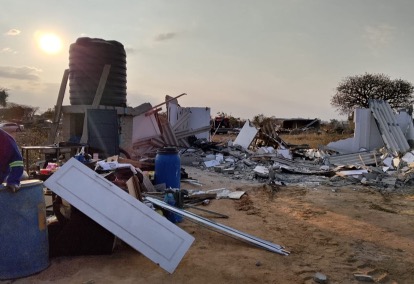
The group’s intervention comes amid growing controversy over demolitions in Harare, particularly following the destruction of homes at St Martins Phase 2 in August, where residents said they had purchased residential stands from the local authority and invested substantial sums in construction.
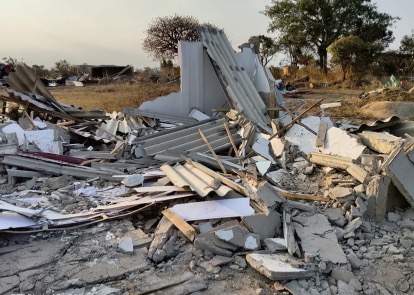
Investigations by NewsHour established that some of the structures demolished during the August 14 operation were identified in High Court proceedings covered by a consent order issued by Justice Happias Zhou on October 29, 2025, under case number HCH5444/25.
The order set aside demolition notices issued by the council and barred the local authority, or anyone acting on its behalf, from evicting the applicants or demolishing their homes at St Martins Extension without a valid court order.
However, the order did not declare all construction in the settlement lawful and also prohibited the applicants from undertaking further development without written council approval.
NewsHour reported that residents under the St Martins Housing Pay Scheme had paid for land and development works, including water and sewer infrastructure, but complained that the project had stalled despite their financial contributions.
The housing scheme’s chairperson, Dave Jenje, said residents had reached approximately 85 percent completion of water and sewer works before the demolitions.
NewsHour also established that construction materials intended for the project, valued at about US$700,000, had gone missing from council premises in Remembrance, Mbare, with no criminal investigation undertaken at the time of publication.


Council spokesperson Stanley Gama maintained that structures protected by the court interdict were not being demolished, insisting that the operation targeted buildings erected illegally despite repeated warnings.
The controversy has since widened following the council’s October 26 public notice giving residents in settlements earmarked for regularisation 14 days to meet outstanding requirements or risk demolition.
Under the notice issued by acting town clerk Warren Chiwawa, affected residents were required to settle land charges and penalties, submit architectural plans for approval and meet outstanding infrastructure obligations.
City of Harare said structures on ecologically sensitive land and sites reserved for public facilities that could not be regularised would also face demolition.
We The People said the approach risked punishing ordinary families for longstanding failures in housing administration and demanded a negotiated solution.
“Families who put years of wages and labour into building their homes deserve a fair hearing and a workable route to secure tenure.
“We demand that Harare withdraw the ultimatum, that the authorities halt forced evictions and demolitions, and that they negotiate affordable regularisation with residents and housing cooperatives.
“Publish the criteria and charges. Give households a fair opportunity to contest decisions. Agree on a timetable for water, sanitation and secure tenure,” the statement said.
The movement further called on authorities to make regularisation requirements transparent and provide residents with an opportunity to challenge decisions affecting their properties.
Zimbabwe’s Constitution, under Section 74, provides that no person may be evicted from their home or have their home demolished without a court order made after considering all relevant circumstances.
The constitutional safeguard has become central to disputes involving informal settlements and contested land allocations, particularly where residents argue that they acquired stands through local authorities or housing cooperatives.
Beyond the housing crisis, We The People also condemned the confiscation of vendors’ goods, calling for negotiations to establish serviced trading spaces that would allow informal traders to earn a living.
The movement said its opposition to demolitions formed part of a broader campaign against what it described as the prioritisation of politically connected business interests over ordinary Zimbabweans.
Over the next 90 days, it plans to organise three campaigns focusing on stopping evictions and demolitions, defending the environment and popularising the national anthem.
The group said it would mobilise citizens across political affiliations through community assemblies and public engagement, with its Speaker of the People’s Parliament expected to convene at least one sitting every month to discuss community demands.
We The People also invited residents to join local assemblies and participate in shaping its campaigns, insisting that membership was open to people regardless of political affiliation.