By Staff Reporter
HARARE — A black Toyota Fortuner pulls up at the arrivals curb of Robert Gabriel Mugabe International Airport.
Its driver’s face matches the digital identity displayed on the passenger’s phone.
The vehicle is tracked, the route logged and the fare agreed before the door opens.
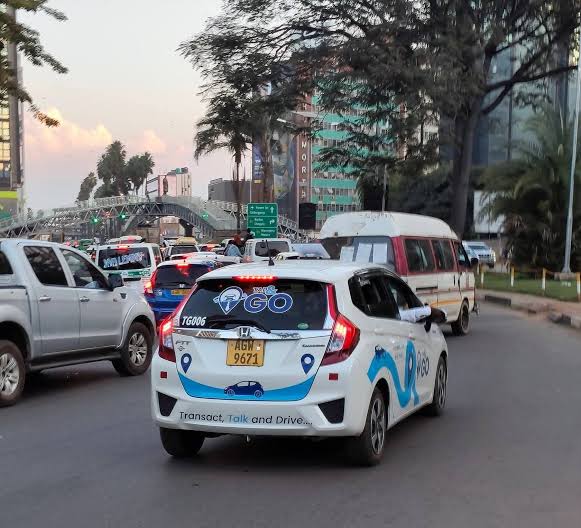
This is the changing face of airport transport in Zimbabwe, driven by e-hailing platform Tap and Go.
Travellers who once faced unregulated taxis, inflated fares, unexplained charges and safety concerns after dark can now book rides through a system built around digital verification and traceability.
Launched in 2025 by investment adviser Dr Paul Tungwarara, Tap and Go has sought to bring predictability to a transport sector long dominated by informal operators.
Tourists arriving at RGM International can book through a mobile application, track their ride in real time and make cashless payments.
Starlink-enabled connectivity is also used to maintain communication in areas where conventional mobile networks are unreliable.
More than 60 vehicles were connected to the platform at launch, with the service later expanding to Bulawayo and other areas.
Security is a key part of the model, with drivers and passengers subject to digital identity verification while vehicles and journeys remain traceable.
An official said the system was designed to give passengers greater security when using e-hailing services.
“We have real-time tracking and digital identity verification, which means commuters can travel with greater peace of mind.
“Our rides are traceable, and verified rides are expected to reduce criminal activity linked to unregulated services,” the official said.
Such traceability is particularly significant at an international airport, where visitors are unfamiliar with local transport operators, fares and routes.
A tourist arriving after a long-haul flight may be carrying valuables and have little knowledge of prevailing transport prices.
Digital booking removes much of the uncertainty by allowing passengers to identify their driver, agree on the fare and track the journey.
Every ride is recorded, while driver verification provides an additional layer of accountability.
Ordinary Zimbabweans have also embraced the service as an alternative to a commuter transport system that has struggled with reliability and safety concerns.
Early users have praised the application’s interface and response times, while the company says its operations have created hundreds of jobs.
Expansion into Bulawayo in December 2025 extended the same model to Zimbabwe’s second-largest city, bringing real-time tracking, digital verification and Starlink connectivity to the service.
Tap and Go described the expansion as “a major step forward”, saying it was in line with efforts to develop Bulawayo as a technology-driven urban hub.
Reliability is another selling point.
Starlink-equipped vehicles allow communication between drivers, dispatch teams and customers to continue in areas affected by poor mobile network coverage.
The company says this helps improve pick-ups, routing and communication between passengers and drivers.
Government has also moved to accommodate the growing e-hailing industry.
Cabinet recently granted e-hailing operators a five-month regulatory reprieve while authorities work on a formal framework covering driver conduct, passenger safety and tax compliance.
Information Minister Dr Zhemu Soda said the government recognised the role of e-hailing services in providing “convenient, affordable and dignified transport.”
At Zimbabwe’s main international gateway, the change is increasingly visible.
Passengers arriving at RGM International can now book a vehicle before leaving the terminal, identify their driver, track their journey and know the fare in advance.
For a sector long associated with uncertainty, technology is bringing a different proposition — one built around convenience, traceability and accountability.
At the airport, that change begins with a tap.