By Victor Fanuel
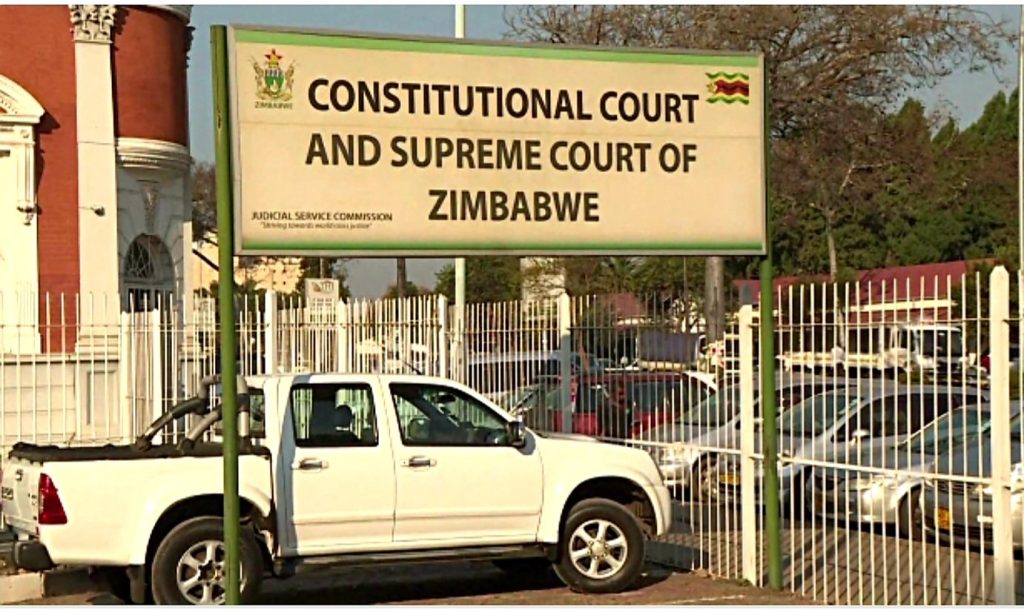
HARARE — The Constitutional Court has blocked online media organisations from livestreaming Wednesday’s high-stakes hearings challenging Constitution of Zimbabwe Amendment (No. 3) Act, shutting millions of Zimbabweans out of a potentially landmark constitutional showdown.
Chief Registrar Dorothy Hazvinei Mwanyisa informed the Zimbabwe Online Content Creators (ZOCC) that its application to broadcast proceedings scheduled for November 18 and 25 had been rejected.
The decision was communicated in a brief two-paragraph letter which simply stated that the request “was denied”, without explaining the reasons for the refusal or indicating whether alternative arrangements for wider public access had been considered.
ZOCC had approached the court arguing that the proceedings were of considerable national importance and should be accessible beyond the limited number of people who could fit inside the courtroom.
The umbrella body, which represents 169 media organisations and content creators, including 18 online broadcasting platforms, said livestreaming would allow citizens to follow arguments over an amendment that could fundamentally reshape Zimbabwe’s electoral and governance systems.
Its November 10 application invoked sections 61, 62 and 68 of the Constitution, covering freedom of expression and the media, access to information and the right to administrative justice.
“Access to justice should be complemented by access to information,” the association argued.
ZOCC also undertook to comply with the court’s requirements on camera positioning and coverage, naming outlets including NewZimbabwe.com, News Hawks, ZimLive, Bulawayo24, TechMagTV and 263Chat among its proposed participants.
The refusal comes as the country’s highest court prepares to examine a constitutional amendment that has triggered fierce legal and political opposition over presidential succession, parliamentary terms, judicial appointments and the limits of Parliament’s powers.
Parliament’s compliance with section 328 of the Constitution, which sets out the procedure for amending the country’s supreme law, is now under challenge.
Section 328(3) requires the Speaker of Parliament to publish the precise terms of a Constitutional Amendment Bill in the Government Gazette at least 90 days before it is presented to Parliament.
The following subsection, section 328(4), obliges Parliament to invite public submissions and convene meetings to allow citizens to express their views on the proposed changes.
Vhurande Mahlupeko, whose application is expected to be heard first, alleges that as many as 10 provisions eventually incorporated into CAA3 were absent from the original Gazette notice that initiated the amendment process.
His argument is that citizens could not meaningfully participate in consultations on provisions that had not been disclosed in the original proposals.
The application seeks to have the entire amendment declared invalid rather than merely striking down individual provisions.
A separate challenge by former legislator Prince Dubeko Sibanda targets provisions extending presidential and parliamentary terms from five to seven years, with particular emphasis on whether the changes can benefit current officeholders.
Section 328(7) expressly provides that an amendment to a term-limit provision extending the period a person may hold public office does not apply to someone who already held that office, or an equivalent office, before the amendment.
However, CAA3 introduces provisions into sections 95 and 143 stating that the extended terms will apply to the continuation in office of the President and Parliament, notwithstanding section 328(7).
That apparent conflict between the amendment and an existing constitutional safeguard is central to Sibanda’s case.
The legal question is whether Parliament could lawfully introduce provisions purporting to override section 328(7) without complying with the constitutional amendment procedures.
The applicants’ argument is that such provisions effectively amend the protection contained in section 328(7), thereby engaging section 328(9), which requires any amendment to section 328 to follow the procedures in subsections (3), (4), (5) and (6), including a national referendum.
Section 328(9) expressly requires a referendum for an amendment to section 328 because subsection (6) applies as though section 328 were contained in Chapter 4.
Whether the provisions introduced by CAA3 amount to an amendment of section 328, and whether the prescribed procedure was therefore required, is a question for the Constitutional Court to determine.
The wider controversy also touches section 2, which declares the Constitution Zimbabwe’s supreme law and invalidates any law, practice or conduct inconsistent with it.
Parliament has authority to amend the Constitution under section 117(2)(a), but that power is expressly subject to the procedures and safeguards contained in section 328.
CAA3, signed into law on July 7, 2026, also replaces direct presidential elections with a system in which the President is elected by members of Parliament sitting jointly as the Senate and National Assembly.
That change has generated a separate constitutional argument concerning section 67, which protects citizens’ political rights, including the right to participate in elections.
Critics contend that removing the direct popular election of the President affects rights protected under Chapter 4 and therefore engages the referendum requirement in section 328(6).
Whether the change amounts to an amendment of Chapter 4 requiring a referendum is a matter for judicial determination.
The amendment further increases the Senate from 80 to 90 members, with 10 additional senators appointed by the President, and changes the composition and appointment arrangements of the Constitutional Court.
The first two challenges were initially scheduled for November 11 but were postponed after lawyers representing the applicants, led by constitutional law professor Lovemore Madhuku, objected to judges appointed following the expansion of the court under the contested amendment participating in cases challenging its validity.
The court agreed to reconstitute its bench before proceeding with the substantive matters.
Separately, the refusal to allow livestreaming has drawn attention to public access to judicial proceedings, particularly as section 61 protects freedom of expression and the media, while section 62 provides for access to information held by the State in the interests of public accountability.
Those provisions do not automatically confer an unconditional right to film or livestream court proceedings, but the applicants argued that wider coverage would advance public access to proceedings of exceptional national importance.
The Constitution Defenders Forum has called on supporters to gather outside the Constitutional Court at 9am on Wednesday in solidarity with the applicants.