By Victor Fanuel
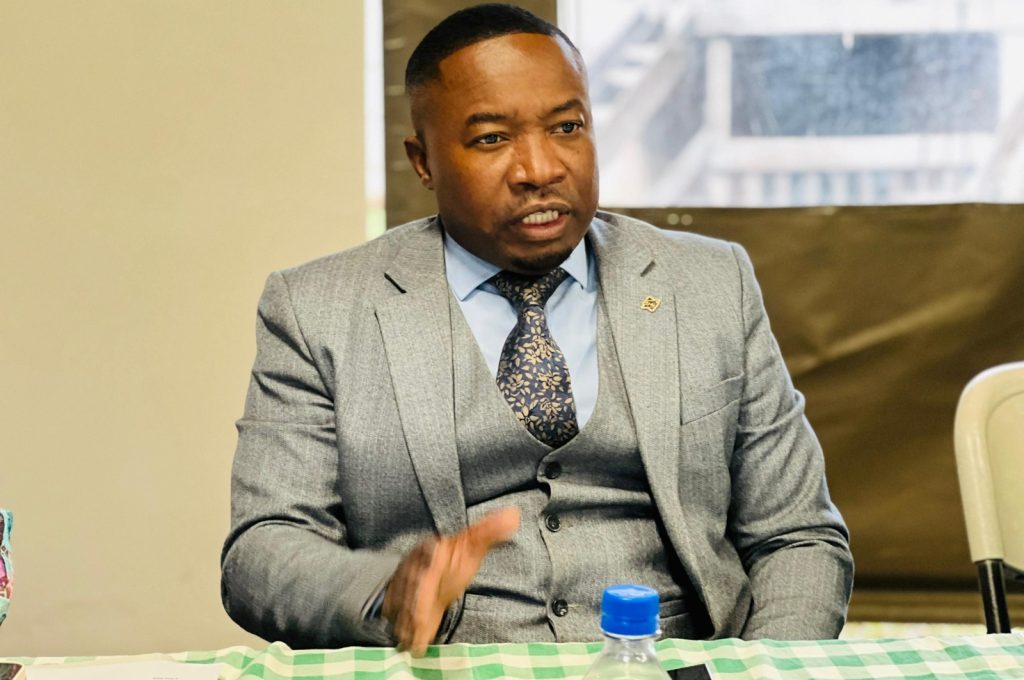
HARARE — Harare Mayor Jacob Mafume has acknowledged that local authorities could face compensation claims over unlawful demolitions, insisting that residents whose properties were wrongfully destroyed are entitled to seek financial redress.
The Urban Councils Association of Zimbabwe (UCAZ) president said councils must accept responsibility where their enforcement actions violate the law, warning that the destruction of residents’ properties cannot simply be dismissed without addressing the losses suffered by affected families.
“We are not perfect and we will compensate demolition victims.
“Nothing is perfect. No institution can provide perfection in its application of the law,” he said.
Mafume added: “We look at everything that has affected any resident or anybody within a particular locality, and we look at compensating that individual once they prove their claim at law.”
“For as long as the particular individual can prove that the action taken was unlawful and in violation of the law, then you compensate.
“Where you have wronged an individual or a group of individuals, you are liable to compensate,” Mafume said.
His remarks come as the Government moves to contain mounting public anger over demolitions, having ordered all 92 local authorities across the country to immediately suspend the destruction of properties and prioritise negotiations with affected residents.
Local Government and Public Works Minister Daniel Garwe announced the directive on Tuesday, covering 32 urban councils and 60 rural district councils.
Authorities have been instructed to give residents time to resolve outstanding disputes and explore regularisation instead of immediately resorting to demolitions.
Harare City Council has already suspended all housing demolitions and extended the deadline for residents in dysfunctional settlements earmarked for regularisation to December 31.
The extension gives homeowners more time to meet council requirements after the initial 14-day deadline expired on Tuesday, November 17.
Affected homeowners are expected to pay US$2,480, comprising a US$1,500 regularisation fee, a US$900 penalty for building without council approval and US$80 for failing to attend council interviews.
Most of the affected residents bought land through housing cooperatives, developers and other land intermediaries.
Many are now being asked to pay additional fees and penalties despite having already paid for residential stands and infrastructure through developers.
Mafume, whose association was instrumental in communicating the directive to urban councils, said UCAZ would act as an intermediary between local authorities and affected residents, encouraging dialogue and solutions to prevent further destruction.
The compensation question is particularly pressing in Harare, where families have lost homes and life savings after years of saving and construction, with some insisting that they acquired their stands through official council-linked housing arrangements.
At St Martins Extension, where bulldozers destroyed homes on August 14, residents said they had paid for residential stands and invested in housing developments through arrangements involving the City of Harare.
Investigations by NewsHour established that some of the structures demolished during the operation were covered by a consent order issued by Justice Happias Zhou on October 29, 2025, under case number HCH5444/25.
The order set aside demolition notices affecting the named applicants and barred the council, or anyone acting on its behalf, from evicting them or demolishing their homes without a valid court order.
It did not, however, declare all construction in the settlement lawful.
NewsHour also established that residents under the St Martins Housing Pay Scheme had contributed towards land and development works, including water and sewer infrastructure, while construction materials worth approximately US$700,000 intended for the project had gone missing from council premises.
Mafume’s intervention comes amid growing demands for more than a suspension of demolitions, with residents and civic organisations insisting that authorities must account for damage already inflicted on communities.
Harare Residents Trust (HRT) director Precious Shumba has criticised the destruction of properties, arguing that affected families deserve accountability rather than assurances that demolitions will stop.
Combined Harare Residents Association (CHRA) director Reuben Akili has also called for compensation, saying residents should not be left to bear the consequences of transactions involving local authorities themselves.
Garwe has meanwhile sought to distance Government policy from the demolitions, maintaining that no government law requires the destruction of citizens’ homes.
“There is no government law that says houses should be demolished.
“We are actually protecting citizens from demolitions,” he said at a recent press conference.
Mafume’s compensation pledge now puts local authorities under pressure to demonstrate whether they will accept liability where unlawful demolitions are established and how affected residents will secure redress.