By Victor Fanuel
HARARE — The People’s Coalition says it will intensify its nationwide “Yellow Card” campaign against President Emmerson Mnangagwa’s controversial 2030 agenda, declaring that the movement has evolved into a permanent symbol of peaceful resistance against what it describes as injustice, corruption and constitutional violations.
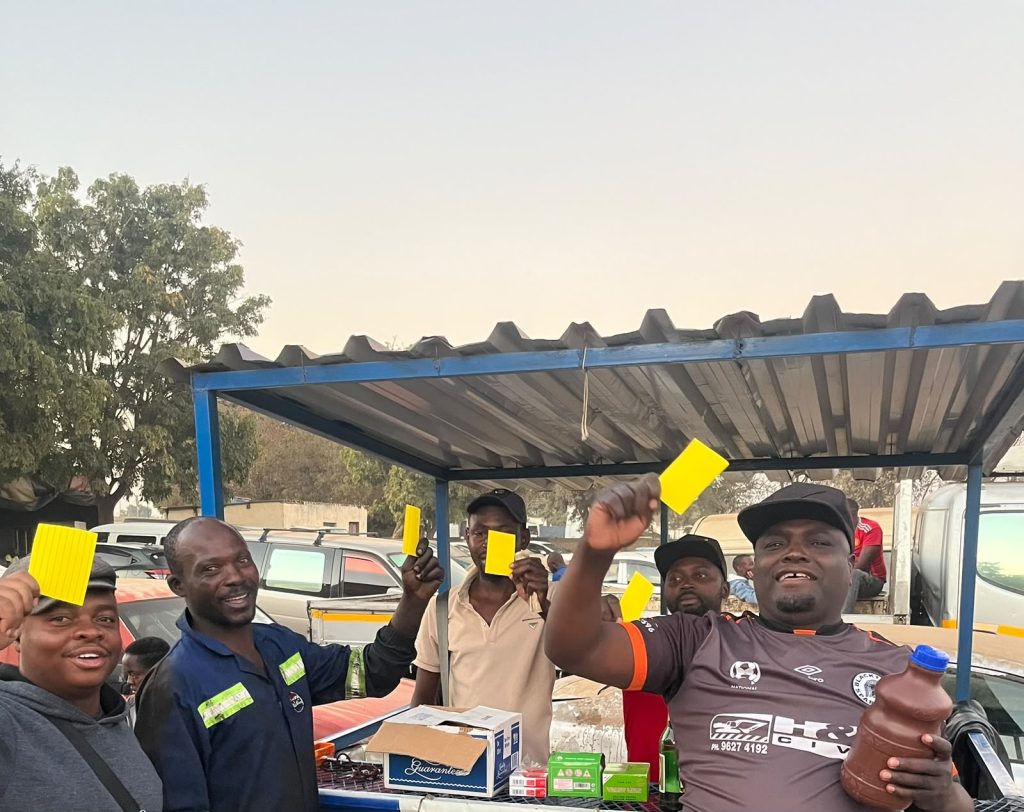
In a statement issued on Monday following Sunday’s coordinated #FairPlay campaign, the coalition claimed that more than 1,000 Zimbabweans participated by displaying yellow cards in a symbolic protest calling for constitutionalism, accountability and democratic governance.
The campaign comes as critics of the ruling Zanu PF government’s political reform agenda continue to oppose Constitutional Amendment Act No. 3 (CAA3), which Parliament recently passed despite fierce objections from opposition parties and civil society organisations.
CAA3 has become a rallying point for government critics who argue that the amendments weaken constitutional safeguards and consolidate executive authority.
Government, however, insists the changes are necessary to improve governance and accelerate the country’s development agenda.
The People’s Coalition said Sunday’s campaign had demonstrated that citizens could organise peaceful civic action to express dissatisfaction with the country’s direction.
“Yesterday, more than 1,000 citizens joined the #FairPlay Yellow Card Campaign, transforming a simple symbol into a powerful call for fairness, justice, accountability and respect for the Constitution and our democracy,” the coalition said.
It thanked Zimbabweans who participated in the initiative, adding that the campaign would continue beyond a single event.
“This campaign does not end with one football match.
“The yellow card is now a symbol that belongs to the people,” the coalition said.
The coalition said the yellow card represented the grievances of ordinary Zimbabweans battling economic hardship and deteriorating public services.
“The yellow card belongs to every struggling vendor whose goods are confiscated without viable alternatives.
“It belongs to every worker whose wages can no longer keep pace with the cost of living.
“It belongs to every family forced to choose between paying rent and buying food,” said the coalition.
It also linked the campaign to concerns over youth unemployment, failing public services and alleged corruption.
“When corruption robs communities of development, we raise the yellow card.
“When public office is used to serve the interests of a few instead of the many, we raise the yellow card,” said the coalition.
The coalition insisted the campaign was intended as a peaceful form of civic expression rather than an incitement to violence.
“The yellow card is not a symbol of violence or hatred.
“It is a peaceful reminder that fair play should apply not only on the football pitch, but also in our governance, our economy and our daily lives,” said the coalition.
It added that the initiative was also intended as “a peaceful warning to those entrusted with public office that leadership must remain accountable to the people and faithful to the Constitution.”
The coalition urged Zimbabweans to continue displaying yellow cards whenever they wished to draw attention to “injustice, inequality, corruption, abuse of power or any form of unfair treatment.”