By Victor Fanuel
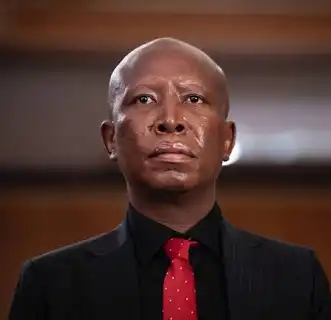
HARARE — Economic Freedom Fighters (EFF) leader Julius Malema has declared himself “Zimbabwean” in remarks widely interpreted as a rebuke of South Africa’s resurgent anti-migrant campaign.
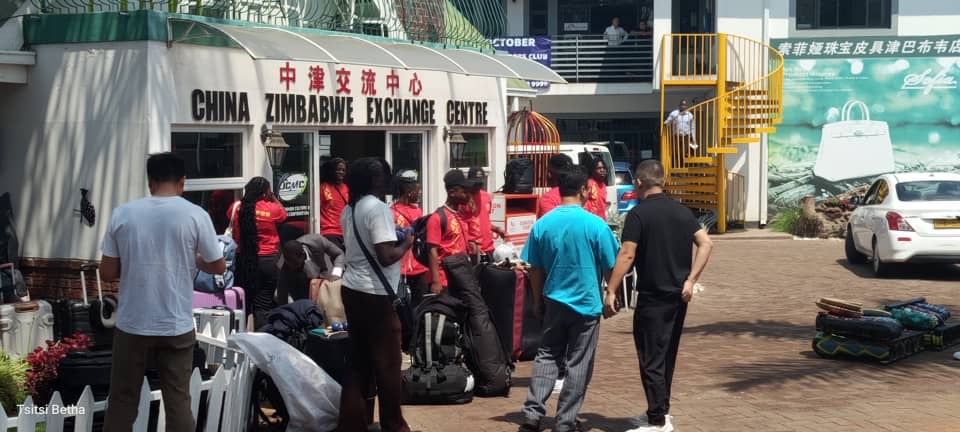
His comments come as Zimbabwe says it has repatriated more than 115,000 citizens from South Africa amid growing concerns over hostility and uncertainty facing migrants in the neighbouring country.
Speaking at a press conference on Thursday on what he described as the dangers of “Afrophobia”, Malema argued that Africans shared common ancestry that transcended modern national borders.
“That’s why many of these people, many of us, if we’re to trace us, it takes us back to the continent.
“You must listen to my grandfather who passed away now,” Malema said.
Malema added: “When he praises me in one of the praises he conducted at the manifesto launch of the EFF, I think in Polokwane…”
“At the end of that praise singing, he says, Malema MuZimbabwe.
“Beat me if you can,” said Malema.
Although Malema did not mention any organisation by name, his comments have been widely perceived as taking a swipe at the anti-migrant mobilisation led by the vigilante group March and March, which has spearheaded demonstrations demanding the removal of undocumented foreign nationals from South Africa.
Although Malema did not mention any organisation by name, his comments have been widely perceived as taking a swipe at the anti-migrant mobilisation led by the vigilante group March and March, which has spearheaded demonstrations demanding the removal of undocumented foreign nationals from South Africa.
The campaign has drawn criticism from human rights organisations and political leaders, who accuse it of fuelling xenophobic violence against African migrants.
Since June, thousands of protesters have marched in cities across South Africa, blaming undocumented migrants for crime, unemployment and pressure on public services.
While organisers insist their campaign targets illegal immigration rather than foreign nationals generally, the demonstrations have coincided with attacks on migrant-owned businesses, forced evictions and the displacement of thousands of Zimbabweans, Malawians and other African nationals.
Malema has consistently rejected attempts to blame migrants for South Africa’s economic challenges, arguing that unemployment, inequality and poor public services stem from governance failures rather than the presence of fellow Africans. M
The worsening situation has forced Zimbabwe to mount one of its largest repatriation operations in recent years.
Presenting an update to Cabinet last week, Local Government and Public Works Minister Daniel Garwe said 36,940 Zimbabweans had returned through government-assisted repatriation, while another 79,730 had returned on their own, bringing the total number of returnees from South Africa to more than 115,000.
Garwe said a further 870 Zimbabweans had self-repatriated through Botswana entry points.
He said 38,057 returnees had registered under the government’s skills registration programme, with several local companies already expressing interest in employing them.
Government was also pursuing bilateral engagements with South Africa over employment benefits, pensions and unpaid salaries lost by returning Zimbabweans, Garwe said.
At the Beitbridge Reception Centre, the clinic has treated 2,147 returnees — comprising 851 men, 1,296 women and 575 children under the age of 15 — for ailments including upper respiratory tract infections, diarrhoeal diseases and headaches.
Authorities have also undertaken 512 bus trips to transport returnees from Beitbridge to destinations across Zimbabwe, while additional trucks are being mobilised to move household goods and business equipment.
Treasury has released an additional US$2 million for the repatriation programme, bringing total government funding to US$3.4 million.
United Nations agencies have contributed about US$564,000, while the International Federation of the Red Cross and Red Crescent Societies has provided US$264,000 for hygiene promotion and transport support.
Government is also establishing a reception centre in Harare to assist returnees settling in the capital.