By Marshall Bwanya
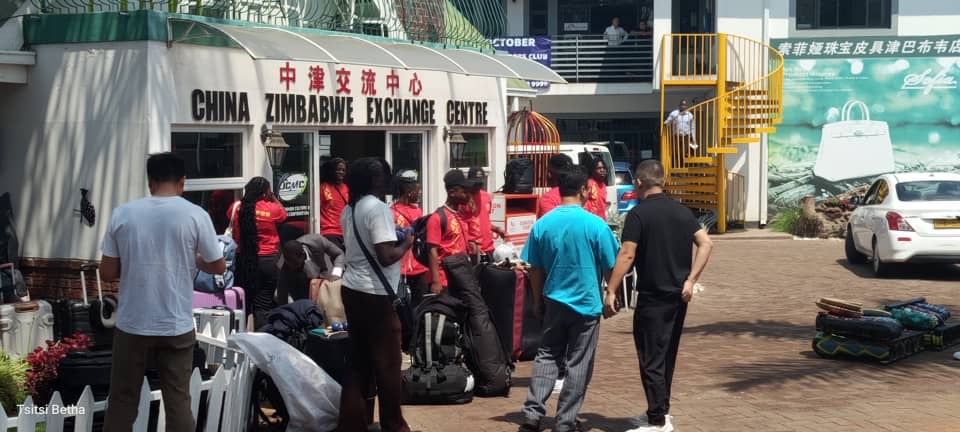
HARARE — Chinese capital, electric vehicles, mining machinery and a fresh pipeline of jobs are set to take centre stage when the 2026 China-Zimbabwe Commodity Expo and Job Fair opens in Harare this week, as businesses from the two countries look to turn deepening economic ties into new commercial opportunities.
Running from October 9 to 11 at Belgravia Sports Club under the mantra “Where products meet markets and talent meets opportunity”, the inaugural expo is expected to bring together about 100 companies, job seekers, students, entrepreneurs and consumers in a three-day showcase of trade, technology, employment and culture.
China’s economic footprint gives the event considerable weight.
Cumulative Chinese investment in Zimbabwe has now surpassed US$10 billion, according to recent statements by Chinese officials and reports from Zimbabwean business media, making China the country’s largest foreign investment partner.
The capital has flowed into sectors including mining, steel, cement, mineral processing, energy, manufacturing and digital infrastructure.
ZIDA figures provide another measure of the acceleration. Chinese investors accounted for 441 investment licences worth US$2.75 billion in 2024, making China by far the largest source market for licensed investment into Zimbabwe that year.
The figure was sharply higher than the US$52.28 million recorded from 56 Chinese investors in 2023.
Bilateral trade has expanded alongside investment.
China’s foreign affairs ministry says trade between the two countries reached a record US$4.4 billion in 2025, up 15.2 percent from the previous year, with Chinese exports to Zimbabwe worth US$1.83 billion and Zimbabwean exports to China reaching US$2.57 billion.
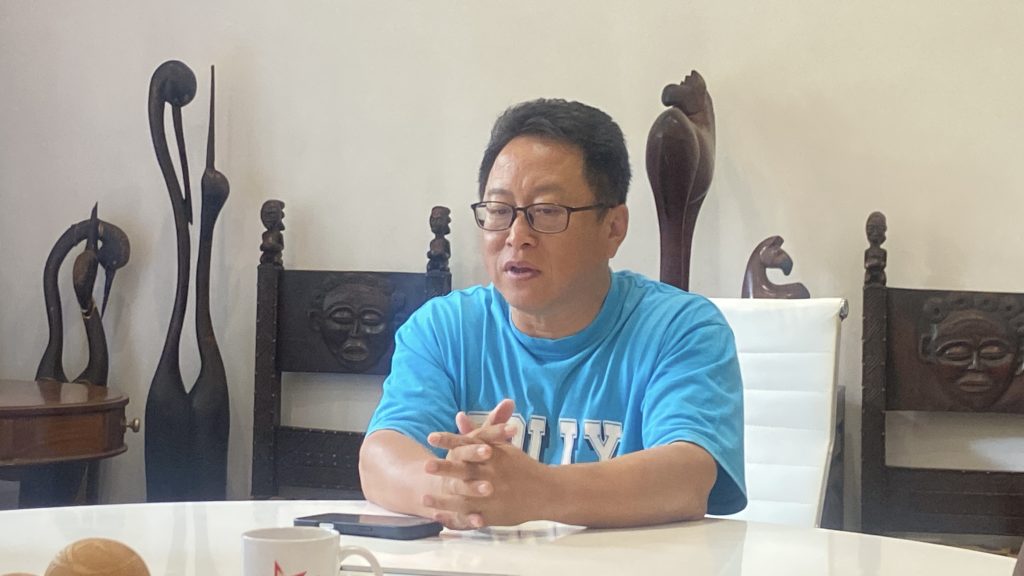
Organiser Steve Zhao says the new expo is designed to become a permanent commercial bridge between Chinese and Zimbabwean businesses rather than remain a once-off exhibition.
“There are a lot of Chinese companies coming to do business in Zimbabwe, and also lots of Zimbabwean people who want to do business with China.
We created the platform for business people to have a dialogue, and also a job fair,” said Zhao.
Zhao added: “There are a lot of young people who have finished university and school who are looking for jobs.”
“We have also asked the Chinese companies to come together to offer job opportunities to students and young people,” he said.
Zhao said the organisers intend to make the event an annual fixture, although the timing of next year’s edition has not yet been finalised.
“This year, we’re focusing more on motor vehicles.
“As you can see, we have many vehicle companies coming in, showcasing electric cars as well as heavy vehicles for mining, aquaculture, loaders and excavators.
“We’re mainly focusing on vehicles this year because of the global challenges surrounding fuel shortages and rising prices,” Zhao said.
Electric mobility is expected to be one of the defining themes of this year’s expo, placing Chinese vehicle technology at the centre of a conversation that has become increasingly urgent as global energy markets are buffeted by geopolitical conflict.
Recent disruption in the Middle East has sent another warning through the global economy about the vulnerability of oil-dependent transport systems.
Brent crude climbed above US$104 a barrel on Thursday as attacks on shipping in the Gulf and Strait of Hormuz raised concerns over further supply disruptions.
The waterway handles roughly a fifth of global oil flows.
Zimbabwe is hardly insulated from such shocks.
Higher international oil prices feed into fuel costs, transport charges, logistics expenses and ultimately the price of goods moving through an import-dependent economy.
Zhao said the expo’s decision to concentrate heavily on vehicles was therefore deliberate.
“This year, we are mainly we’re focusing more on vehicles.
“As you can see, we have so many vehicle companies coming in, you know, electric cars, and also heavy vehicles for mining, aquaculture, loaders and excavators,” he said.
Zhao added: “You know, there’s some problem with fuel shortages and prices going up.”
“That is why we also introduced electric cars from China to Zimbabwe,” he said.
Zimbabwe’s electric-vehicle market is no longer merely theoretical.
Chinese manufacturer BYD already markets electric and plug-in hybrid vehicles locally, including the Atto 3, Dolphin Surf, Sealion 6 and Shark 6.
Regulation is also beginning to catch up with the technology.
Zimbabwe gazetted the Electricity (Electric Vehicle Charging Station Safety) Regulations, 2026, establishing requirements for EV charging infrastructure and technical standards.
That creates a much larger opportunity than simply selling cars.
Electric vehicles require charging networks, technicians, battery servicing, software expertise, finance, insurance, spare parts, dealerships and energy infrastructure.
Chinese manufacturers and technology companies can gain access to a growing market, while Zimbabwean businesses can build local services around the technology.
Mining presents another potential market.
Zimbabwe is one of Africa’s major mineral producers, while Chinese companies have become deeply involved in the country’s mining and mineral-processing industries.
Electric mining equipment, loaders, excavators and other lower-emission machinery could therefore open a second front in the transition away from petroleum-dependent industrial operations.
Zimbabwe’s opportunity is not simply to become a destination for Chinese manufactured goods.
China’s decision to extend zero-tariff treatment to all African countries with which it maintains diplomatic relations has created another opening for Zimbabwean exporters.
The policy took effect on May 1, 2026, with the measures applying to 20 African countries that are not classified as least-developed countries for a two-year period.
Zimbabwe can potentially use that access to expand exports of minerals, tobacco, agricultural products and processed goods while seeking greater value addition at home.
Chinese demand, meanwhile, gives Zimbabwean producers a large market on their doorstep — but the bigger prize is moving beyond raw commodity exports into processing, manufacturing and technology-linked value chains.
That ambition is already reflected in the bilateral agenda.
A 2024 China-Zimbabwe joint statement specifically welcomed Chinese investment in Zimbabwe’s new-energy value chains, while the two governments also agreed to strengthen cooperation in mining, industrial development and infrastructure.
Zhao sees the expo as a mechanism for connecting those opportunities at ground level.
“There are a lot of Chinese companies coming to do business in Zimbabwe, and also lots of Zimbabwean people want to do business with China as well,” Zhao said.
Employment will be the other major test of the expo.
Zhao said participating companies would recruit across a wide range of positions, from senior roles to general hands.
“The job fair is recruiting people starting from senior levels up to general hands, general levels,” he said.
Some of the companies he identified include TNC Mining, New Chang Mining and Suny Machinery.
The organisers are also presenting education and skills development as part of the employment proposition.
Zhao said students would be able to access information about scholarships and opportunities to study in China, alongside recruitment and training programmes.
“At this job fair, we’re not only offering people jobs; we also want to offer people scholarships who can go to China,” he said.
His comments come against a backdrop of previous Chinese enterprise job fairs that have already demonstrated demand for local talent.
A 2022 China-Stanbic Job Fair attracted 30 Chinese-run enterprises and advertised 757 job opportunities, with mining and mineral processing companies making up the majority of recruiters.
The following year, the second Zimbabwe Chinese Enterprises Job Fair brought more than 50 Chinese enterprises offering over 1,000 jobs to Zimbabwean youth.
The event was organised by the Chamber of Chinese Enterprises in Zimbabwe, the China-Zimbabwe Exchange Centre and Victory Milestone Recruitment Agency.
Those earlier events point to an important commercial reality that Chinese businesses need Zimbabwean skills, while Zimbabwean graduates need access to employers.
Zhao also sees education as a route into longer-term technology transfer.
“We’re also working with all the mining companies, for example, Plus Minerals, Beginnings Minerals, all these big companies.
“We also talk together to see how they can offer our students opportunities for practical training,” Zhao said.
Talks are also under way, he said, around training programmes involving Huawei and other technology companies.
“Next year I think we’re going to start doing something with Huawei together.
“We’re now talking to Huawei. We want to offer young people training programmes in the country,” he said.
Artificial intelligence and robotics could become the next major focus.
“Next year, we’ll bring Chinese robots, and there’s also robot dogs, robot people, and robots.
“We are going to bring lots of high-tech products to the expo next year,” he said.
That evolution could transform the event from a conventional trade exhibition into a recurring business-to-business marketplace linking investment, recruitment, education and technology.
Zimbabwe, meanwhile, has a strong incentive to ensure that such platforms generate more than product sales.
Chinese investment has become one of the most consequential forces in Zimbabwe’s mining, manufacturing, energy and infrastructure sectors.
Recent figures showing more than US$10 billion in cumulative investment underline the scale of the relationship, while the record US$4.4 billion trade figure demonstrates how quickly commercial exchanges are expanding.
Success at the 2026 expo will ultimately depend on what happens after the exhibition tents come down.
Business cards, product demonstrations and recruitment interviews are only the starting point.
Zimbabwean companies need partnerships that open access to Chinese technology, finance and markets, while Chinese businesses need reliable local partners, skilled workers and predictable operating conditions.
Energy security could make electric vehicles one of the most commercially significant opportunities on display this weekend.
With oil markets again demonstrating how quickly geopolitical tensions can translate into higher transport and production costs, alternatives that reduce exposure to imported fuel are becoming an economic question as much as an environmental one.
Zhao’s vision is ultimately broader than cars, machinery or recruitment.
“It’s not only a fair, it’s also a platform to taste different types of food and experience different cultures,” he said.