By Victor Fanuel
MHONDORO — Government agencies have moved to investigate and safeguard the Sekuru Kaguvi, Mbuya Nehanda and Chinengundu Mashayamombe heritage sites after communities raised alarm over mining-linked developments they fear could damage sacred shrines and ancestral sites in Mhondoro.
Ahead of Heroes Day commemorations, when Zimbabwe honours heroes of the First and Second Chimurenga, efforts to protect liberation heritage sites have gathered pace amid growing calls to preserve sacred places for future generations.
The National Museums and Monuments of Zimbabwe (NMMZ), the Ministry of Mines and Mining Development and Parliament have all pledged action after reports that mining activities could threaten the culturally significant landscape around the shrines.
NMMZ, which assessed the area following complaints from the Gumboreshumba and Mashayamombe communities, said the dispute underscored the need to protect the broader cultural landscape beyond gazetted monuments.
“It is important to clarify that the assessment does not establish that the three proclaimed National Monuments—Kaguvi’s Stronghold, Mashayamombe Kraal and Fort Martin—are affected by the coffer dam.
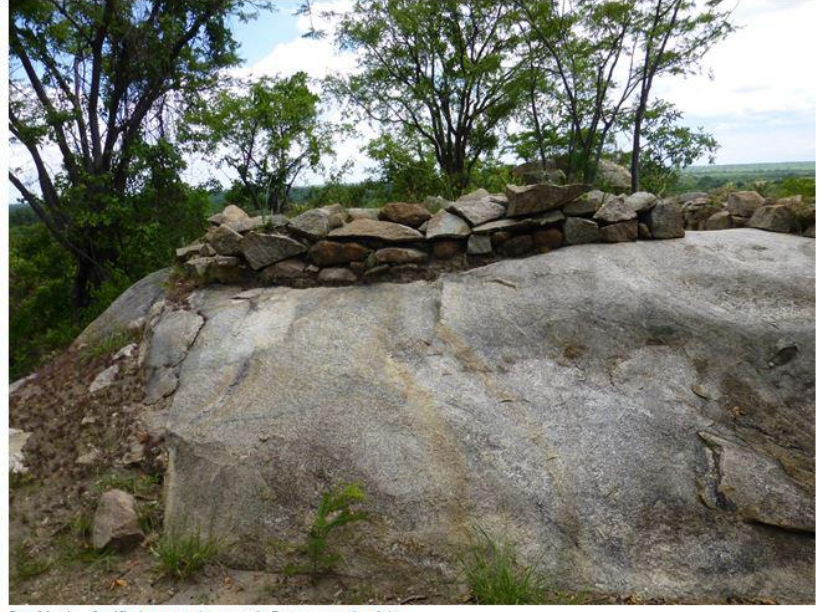
“However, the assessment established that the wider cultural landscape contains a much broader range of significant heritage resources, including sacred pools, caves, shrines, graves, rock art, dry-stone structures, archaeological remains and places associated with continuing traditional practices,” NMMZ said.
NMMZ said Kaguvi’s Stronghold, Mashayamombe Kraal and Fort Martin lie downstream of the current cofferdam and are not directly affected.
However, it identified Dziva raPenyere, a sacred pool used during the installation and cleansing of chiefs, as being directly affected.
“The assessment found that this site will be directly inundated by the current coffer dam,” NMMZ said.
The heritage body also warned that the lower Njatara Cave Complex, including Ninga yaChinengundu, a sacred tunnel linked to Chinengundu Mashayamombe, could be affected, while the Muhacha Shrine may also be at risk depending on final water levels.
It said quarrying and road construction around Banya raKaguvi, a ritual centre above the projected flood level, could also threaten the physical and spiritual integrity of the landscape.
“The Chivero–Mashayamombe area constitutes a connected cultural landscape in which tangible heritage and living cultural traditions remain closely intertwined,” NMMZ said.
NMMZ recommended fencing vulnerable heritage areas, stopping earthmoving activities near sensitive sites, continuous heritage monitoring and a comprehensive Cultural Heritage Impact Assessment before any permanent dam is developed.
It warned that the proposed larger Mhondoro B Dam posed a far greater threat than the existing cofferdam.
“While the current coffer dam has limited direct impacts on most of the identified heritage resources, the larger permanent dam could have significantly greater consequences for the cultural landscape,” it said.
The Ministry of Mines and Mining Development said the reported threats to the shrines were concerning and stressed that mineral exploitation should never come at the expense of national heritage.
“These sites are of immense national historical and cultural importance, and their preservation remains key and a priority to Government,” the ministry said.
The ministry said mining rights were issued in line with the Mines and Minerals Act and only after the required environmental processes.
“Mining rights and licences are issued in compliance with national laws.
“Furthermore, national laws demand that before one engages into mining they should conduct Environmental Impact Assessments (EIAs).
“These safeguards help to preserve our national shrines and other areas of national interest,” the ministry said.
It also said Government was considering stronger legal protections for sacred sites.
“The Ministry acknowledges that sacred sites require enhanced safeguards.
“Plans are in place to strengthen engagement with traditional leaders, heritage custodians, and the National Museums and Monuments of Zimbabwe before granting mining rights near heritage sites,” said the ministry.
Parliament’s Portfolio Committee on Tourism and Hospitality Industry chairperson Joanah Mamombe said the reports required urgent oversight.
“It is deeply concerning that reports are emerging of alleged mining activities encroaching on the Sekuru Kaguvi, Mbuya Nehanda and Chinegundu Mashayamombe shrines.
“These sites are not only sacred to our communities but also form an integral part of Zimbabwe’s history, identity and cultural heritage,” Mamombe said.
Mamombe said Zimbabwe’s legal framework had historically prioritised mining over conservation, creating conflicts between mineral extraction and heritage protection.
“One of the fundamental challenges we face is that our current legal and policy framework has historically elevated mining above many other land uses.
“As a result, mining activities have increasingly been permitted in areas that are environmentally, ecologically and culturally significant,” added Mamombe.
She said Parliament would investigate the matter through its oversight processes and encouraged affected communities to use Parliament’s petition mechanism.
“Development should not come at the expense of Zimbabwe’s cultural identity and historical legacy.
“Economic growth and heritage conservation are not mutually exclusive; with the right policies, Zimbabwe can responsibly develop its mineral resources while safeguarding the cultural and historical assets that define us as a nation,” Mamombe said.
The Government response comes against the backdrop of Chief Chivero’s order last week stopping Chinese-owned GritMine Minerals from continuing work on a cofferdam in the area after ruling that the company had proceeded without the approval of traditional leaders.
In a letter dated August 1, copied to Mashonaland West Provincial Affairs Minister Marian Chombo, the Chegutu district development coordinator, local MP Chamu Chiwanza and Ward 7 councillor David Mutimusakwa, Chief Chivero, born Cornelius Chengera, said:
“You do not have permission from the village head.
“The place is sacred.
“Our ancestors were interred there. This is where Kaguvi’s grave is,” he said.
Chief Chivero added: “The place has sacred pools; this is where we conduct rain-making ceremonies.”
“This is where Kaguvi’s body is and we are waiting for his head to return from England for burial there.
“This is also the place where the First Chimurenga began,” he added.
Chief Chivero’s intervention also follows calls by Zanu PF War Veterans League secretary Douglas Mahiya for authorities to safeguard liberation heritage sites linked to the country’s struggle against colonial rule.
“Heritage sites literally means that there are such sites whose cultural value is recognised nationally and historically.
“These sites are linked to the principles of the revolution and to the struggle for liberation,” he said.
Mahiya identified the shrines of Chief Chinegundu Mashayamombe, Sekuru Kaguvi and Sekuru Chaminuka among sites that require protection.
“Our heritage sites include the Chinengundu Mashayamombe shrine, Sekuru Kaguvi, Sekuru Chaminuka and others, especially those from the First Chimurenga.
“We also have those who fought in the Second Chimurenga, and we must ensure that their graves are protected,” he said.
Communities from Chivero and Mashayamombe villages accuse GritMine Minerals of disturbing sacred sites through excavation works linked to the cofferdam project, saying a larger permanent dam could submerge shrines, graves, rainmaking sites and sacred mountains.
Descendants of First Chimurenga heroes, traditional leaders and villagers have petitioned President Emmerson Mnangagwa to stop or redesign the development, arguing it threatens a landscape of immense historical and spiritual significance.
Sekuru Kaguvi and Chinengundu Mashayamombe were among leaders of the First Chimurenga executed by colonial authorities in 1898.
Their heads were taken to England after their deaths, with efforts underway to repatriate them for reburial in Zimbabwe.