By Victor Fanuel
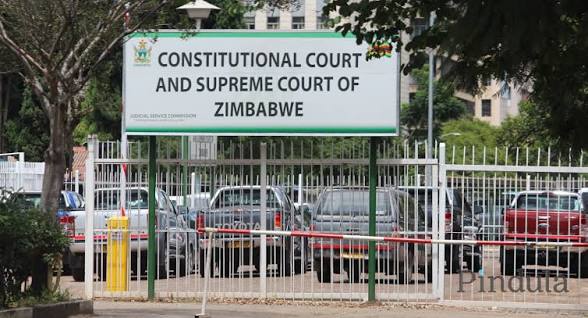
HARARE — A lawyer with deep connections to President Emmerson Mnangagwa has been making private visits to Constitutional Court judges and hosting some of them at his home, according to well-placed sources.
The meetings have raised questions over what is being discussed behind closed doors, coming days before the court begins hearing challenges to the government’s controversial constitutional amendments.
Sources said the lawyer has recently held one-on-one meetings with several Constitutional Court judges, including at his private residence, as the apex court prepares to hear cases that could determine the fate of key provisions of Constitution of Zimbabwe Amendment (No. 3) Act, 2026.
“He has recently had private one-on-one meetings with a number of Constitutional Court judges, including at his own residence,” one source said.
Concern over the alleged meetings is heightened by the lawyer’s reported proximity to the country’s political establishment and previous allegations linking him to cash payments involving consultants associated with the constitutional amendment process.
None of the sources alleged that the judges accepted money or favours, nor is there evidence that any judge has been improperly influenced.
Still, the private encounters have raised concerns among legal and political figures over the appearance of possible interference with judicial officers at a particularly sensitive moment.
CAA3 changes the method of electing Zimbabwe’s president, extending presidential, parliamentary and local government terms from five to seven years and making other changes to the constitutional and electoral framework.
Parliament passed the legislation before Mnangagwa assented to it on July 7.
Now the Constitutional Court is being asked to scrutinise the process and substance of the legislation.
War veterans Reuben Zulu, Godfrey Gurira, Shoorai Nyamangodo, Joseph Chinyangare, Digmore Knowledge Ndiya and Joseph Chinguwa are due before the court on September 22 in a case challenging aspects of CAA3.
A separate challenge brought by MDC leader Douglas Mwonzora has been set down for September 23 before a full bench.
Zulu’s litigation has already taken the government to the Constitutional Court once.
His earlier application challenged Mnangagwa’s participation in the Cabinet process that approved the constitutional amendments, arguing that the President had participated in deliberations concerning changes from which he stood to benefit, including provisions affecting presidential and electoral terms.
Applicants relied on sections 90 and 196 of the Constitution, among other provisions.
The Constitutional Court dismissed that application in June on jurisdictional grounds without determining the substance of the allegations.
The published case record identifies the matter as Reuben Zulu and others v President.
Zulu then pursued another challenge, this time attacking the parliamentary passage of the amendments over allegations that MPs were offered inducements to support the legislation.
Court papers in that matter alleged that two legislators received Toyota Fortuners and US$50,000 from businessman Wicknell Chivayo after supporting the constitutional changes.
Those allegations are contested and have not been established by a court.
Zulu’s argument is that Parliament should not treat a vote as valid if it was improperly influenced by undisclosed benefits without first investigating the alleged inducements.
Mwonzora’s challenge takes a different constitutional route.
His MDC argues that CAA3 unlawfully removed citizens’ direct participation in presidential elections by replacing the existing system with one in which Parliament sits as an electoral college to choose the President.
Under the amended section 92, members of the National Assembly and Senate sit jointly after a general election to elect the President.
MDC argues that change affects the right to vote protected by section 67 of the Constitution and therefore triggered the referendum procedure under section 328.
A full bench is scheduled to hear the challenge on September 23 at 9.30am. (
Beyond the presidential voting system, Mwonzora is challenging the extension of the terms of the President, Parliament and local authorities from five to seven years.
CAA3 was introduced as a wide-ranging package of constitutional changes, including transferring responsibility for voter registration and maintenance of the voters’ roll from the Zimbabwe Electoral Commission to the Registrar-General.
Public hearings on the Bill were held before Parliament passed it, although civic organisations and opposition politicians criticised aspects of the consultation process.
For the Constitutional Court, however, the cases now approaching its docket are not simply another political dispute.
Judges will have to consider questions concerning constitutional amendment procedures, voting rights and the extent of Parliament’s power to alter the country’s constitutional architecture.
That makes the alleged private meetings particularly sensitive.
A judge meeting privately with a lawyer is not, by itself, evidence of wrongdoing.
Lawyers routinely interact with judges in professional settings, and the circumstances and purpose of any particular meeting would need to be established before conclusions could be drawn.
What has heightened concern in this case is the timing, the alleged private nature of the meetings, the lawyer’s reported political connections and the fact that some of the country’s most consequential constitutional challenges are about to come before the same court.
Neither the lawyer nor the Constitutional Court had, at the time of publication, publicly explained the alleged meetings.
Questions also remain over whether any of the judges who allegedly met the lawyer have disclosed the engagements or considered whether they raise any issue concerning recusal or the appearance of a conflict.
With CAA3 already in force unless a competent court rules otherwise, the coming hearings will place both the constitutional amendment and the court’s handling of the challenges under unusually close public scrutiny.