By Naledi Nyoni
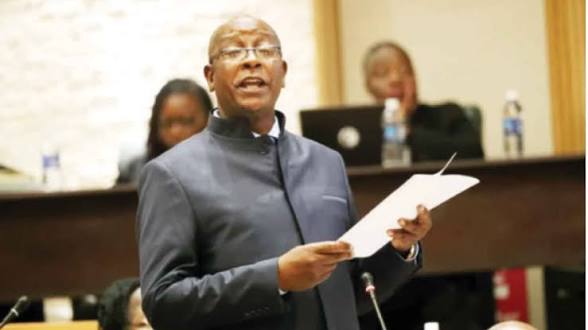
HARARE — The government has abandoned plans to merge the Zimbabwe Gender Commission with the Zimbabwe Human Rights Commission and has dropped a proposal that would have allowed traditional leaders to participate in partisan politics, Justice, Legal and Parliamentary Affairs Minister Ziyambi Ziyambi told Parliament on Wednesday.
The concessions came as Ziyambi wound up the Second Reading debate on the Constitution of Zimbabwe Amendment (No. 3) Bill ahead of a crucial vote expected in the National Assembly on Thursday.
Addressing MPs, Ziyambi said the two provisions had been removed in line with recommendations made by the Joint Parliamentary Committee that scrutinised the Bill.
On the proposed merger of the Gender Commission and the Zimbabwe Human Rights Commission, Ziyambi said MPs from across the political divide had overwhelmingly opposed the measure.
“If you allow me to speak about the issue of the Gender Commission, all the Members were in unity that this clause and that the provision be not adopted,” he said.
The minister said government had proposed the merger in pursuit of institutional efficiency but had accepted the outcome of public consultations and parliamentary scrutiny.
“The argument was made in good faith, but consultation is not theatre.
“Let no-one say the people spoke into the wind,” Ziyambi said.
The proposal was formally withdrawn during the Committee Stage of the Bill on Wednesday evening.
Ziyambi also confirmed that government had dropped a clause that would have allowed chiefs to engage in partisan politics.
He said the amendment had sought to address what government viewed as a contradiction in the Constitution, which permits chiefs to sit in Parliament while barring them from political activity.
However, he said parliamentary consultations had highlighted concerns that traditional leaders, who preside over customary courts and community disputes, must remain politically neutral.
“This principle is unassailable. The government is persuaded,” Ziyambi said.
The clause was subsequently removed during the Committee Stage.
Ziyambi said debate on the Bill had attracted unprecedented participation, with 182 MPs contributing over seven sitting days.
According to Ziyambi, 111 legislators supported the Bill, 31 backed it while expressing reservations on specific provisions, 10 raised concerns without taking a final position and 30 opposed it outright.
He also cited figures from the Joint Committee’s consultations, saying more than 540,000 written submissions had been received, the majority supporting the Bill.
Much of the debate centred on the Bill’s most controversial proposals, including changing the method of electing the President from a direct popular vote to election by Parliament and extending the current electoral cycle from 2028 to 2030.
Opposition Citizens Coalition for Change MPs argued that the proposed changes would unlawfully benefit incumbents and should be subjected to a referendum.
Ziyambi rejected those claims, arguing that the amendments do not alter the Constitution’s two-term presidential limit.
“The national electoral cycle provisions, which this Bill amends, carry no cap or limit on any person and they never have,” he said.
He maintained that the constitutional provision limiting a president to two terms remained untouched.
After Ziyambi’s response, MPs entered the Committee Stage, debating the Bill clause by clause into the early hours of Thursday.
The amended Bill was subsequently referred to the Parliamentary Legal Committee before returning to the House for consideration and a final vote.
With Zanu PF commanding a two-thirds majority in the National Assembly and enjoying overwhelming control of the Senate, the Bill is widely expected to pass before being transmitted to the upper chamber for consideration.