By Staff Reporter
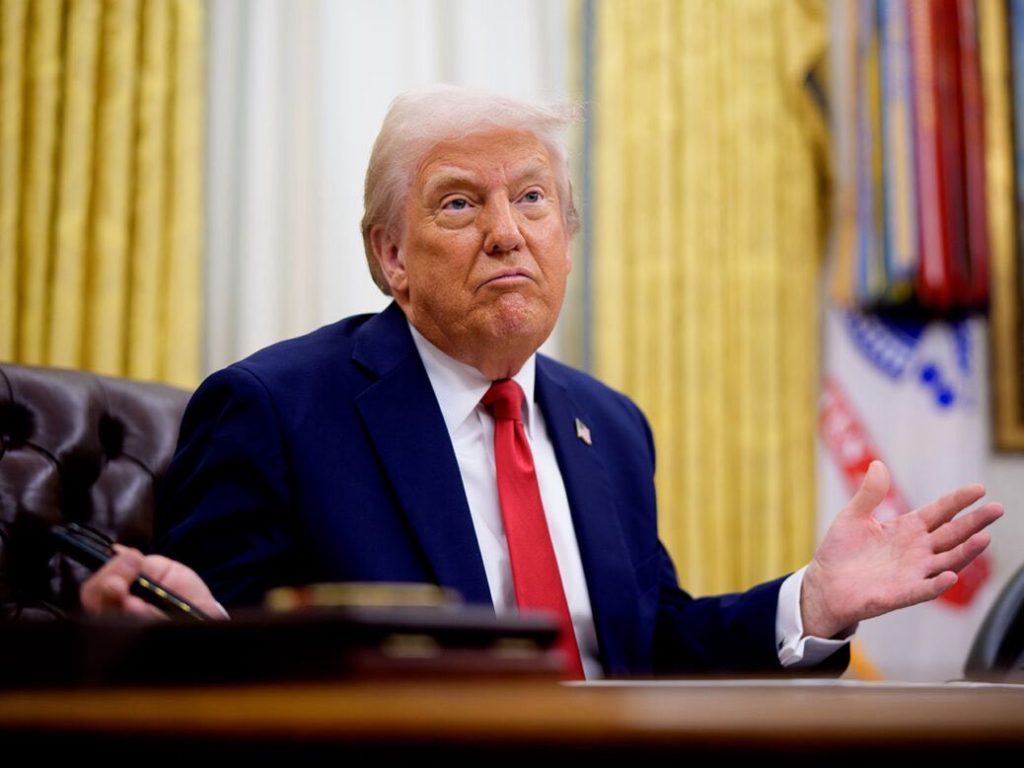
WASHINGTON, United States — United States President Donald Trump has expanded his administration’s travel ban, adding Zimbabwe to a list of countries facing new visa restrictions as part of what the White House says is a tougher push on immigration enforcement and national security.
Under a proclamation signed on Tuesday, Trump imposed a full entry ban on nationals from seven countries, including Syria, while partial restrictions were introduced on 15 others, among them Zimbabwe and Nigeria.
The White House said the measures target countries with “persistent and severe deficiencies in screening, vetting and information-sharing,” which it argues pose risks to U.S. national security and public safety.
Zimbabwe was cited for high visa overstay rates.
According to a U.S. government overstay report referenced in the proclamation, Zimbabwe recorded a 7.89 percent overstay rate for B-1/B-2 visitor visas and 15.15 percent for F, M and J visas, which cover students, exchange visitors and certain training programmes.
As a result, Zimbabweans seeking entry on B-1, B-2, B-1/B-2, F, M and J visas will now face partial suspension and tighter entry limitations.
“The restrictions are necessary to prevent the entry of foreign nationals about whom the United States lacks sufficient information to assess the risks they pose,” the White House said, adding that the measures are intended to encourage cooperation with affected countries based on their “unique circumstances.”
The statement also pointed to challenges such as widespread corruption, unreliable civil and criminal records, weak birth-registration systems and, in some cases, refusal to share passport or law-enforcement data.
High visa overstay rates and reluctance to accept the return of deportable nationals were described as a burden on U.S. immigration enforcement resources.
The latest move fully bans citizens from Burkina Faso, Mali, Niger, South Sudan, Syria, those holding Palestinian Authority-issued travel documents, as well as Laos and Sierra Leone, which were previously under partial restrictions.
Countries newly placed under partial restrictions include Angola, Antigua and Barbuda, Benin, Ivory Coast, Dominica, Gabon, Gambia, Malawi, Mauritania, Nigeria, Senegal, Tanzania, Tonga, Zambia and Zimbabwe.
The bans apply to both immigrants and non-immigrants, including tourists, students and business travellers.
Trump first reinstated and expanded travel restrictions in June, arguing they were necessary to protect the U.S. from “foreign terrorists” and other security threats. Since returning to office in January, he has intensified immigration enforcement, including deploying federal agents to major cities and sharply restricting asylum access at the U.S.–Mexico border.
The latest expansion follows last month’s fatal shooting of two National Guard members in Washington, D.C. Investigators said the suspect was an Afghan national who entered the U.S. in 2021 through a resettlement programme, which Trump administration officials have criticised as inadequately vetted.
Despite the sweeping measures, several categories are exempt, including people who already hold valid visas, lawful permanent residents, diplomats, athletes and individuals whose entry is deemed to be in the U.S. national interest.