By Naledi Nyoni
HARARE — Zimbabwe’s National Railways (NRZ) has entered the country’s rapidly expanding lithium value chain after launching a new rail corridor to transport lithium concentrate to the Port of Maputo, a development expected to reduce logistics costs, boost freight volumes and strengthen the country’s mineral export infrastructure.
Partnering with Zimbabwe’s only private rail operator, Beitbridge Bulawayo Railway (BBR), and logistics company Silvergill, the state-owned railway will move lithium concentrate from Tsingshan’s Gwanda Lithium Mine to Mozambique.
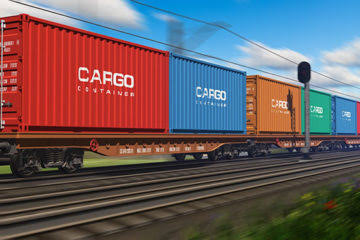
Operations have already commenced, with the consortium dispatching its inaugural shipment of 1,000 metric tonnes of lithium concentrate, marking the first commercial movement of the mineral by rail from Gwanda to Maputo.
Cargo travels along BBR’s 180-kilometre railway between Gwanda and Beitbridge before joining the regional rail network for the roughly 1,000-kilometre journey to the Mozambican port.
Opening the new corridor gives lithium producers an alternative to road haulage, which has dominated mineral exports despite concerns over escalating transport costs, border delays and extensive damage to Zimbabwe’s road infrastructure caused by heavy trucks.
For NRZ, the agreement forms part of a broader strategy to recover freight volumes through private-sector partnerships after decades of decline caused by ageing infrastructure and under-investment.
Freight handled by the railway fell to just two million tonnes in 2025, compared with annual volumes of more than 12 million tonnes at its peak during the 1990s.
Securing the lithium contract provides a significant opportunity to rebuild freight volumes as Zimbabwe’s mining sector continues to expand.
Zimbabwe’s lithium industry has emerged as one of the country’s fastest-growing mineral sectors following more than US$2 billion in investment since 2021, largely by Chinese mining companies including Tsingshan, Sinomine, Zhejiang Huayou Cobalt and Chengxin Lithium.
Official trade data shows Zimbabwe exported 1.13 million tonnes of lithium concentrate to China in 2025, accounting for about 15 percent of China’s total lithium concentrate imports.
Export volumes rose 11 percent from the previous year, although earnings remained broadly flat at around US$514 million due to subdued global lithium prices.
The new logistics corridor comes as Government accelerates efforts to move the industry beyond raw mineral exports towards higher-value processing.
Zimbabwe first banned exports of unbeneficiated lithium ore in 2022 before announcing tighter restrictions on lithium concentrates to compel mining companies to invest in domestic processing facilities.
Authorities argue that exporting higher-value products such as lithium sulphate and battery-grade chemicals will significantly increase export earnings while creating skilled industrial jobs.
The policy has already triggered major downstream investments.
Huayou Cobalt is developing Africa’s first lithium sulphate plant at Arcadia near Harare, while Sinomine is constructing a lithium sulphate processing facility at Bikita Minerals.
Together, the projects are expected to anchor a domestic battery minerals value chain capable of producing hundreds of thousands of tonnes of lithium sulphate annually by the end of the decade.
Industry analysts say beneficiation could fundamentally reshape Zimbabwe’s mining economy.
Instead of exporting relatively low-value spodumene concentrate, local conversion into lithium sulphate and other battery materials would retain more value within the country through increased tax revenues, foreign currency earnings, industrial employment and demand for supporting sectors including transport, engineering, power generation and chemical manufacturing.
For NRZ, the timing is equally significant.
As lithium production continues to expand and more processing plants come on stream, rail is expected to become an increasingly competitive transport option for bulk mineral exports.
The shift could reduce pressure on highways, lower logistics costs for miners and provide the struggling railway with a reliable source of long-term freight volumes as it seeks to restore its position at the centre of Zimbabwe’s transport and export economy.