By Staff Reporter
HARARE — President Emmerson Mnangagwa has launched a regional diplomatic initiative aimed at helping end the growing anti-migrant crisis in South Africa by engaging influential traditional leaders, as Zimbabwe simultaneously scales up the repatriation and reintegration of thousands of citizens returning home.
The initiative comes amid escalating anti-migrant protests and heightened immigration enforcement in South Africa that have displaced thousands of foreign nationals, including Zimbabweans, prompting Harare to pursue what officials describe as a regional solution that addresses both the immediate humanitarian crisis and its underlying socio-economic causes.
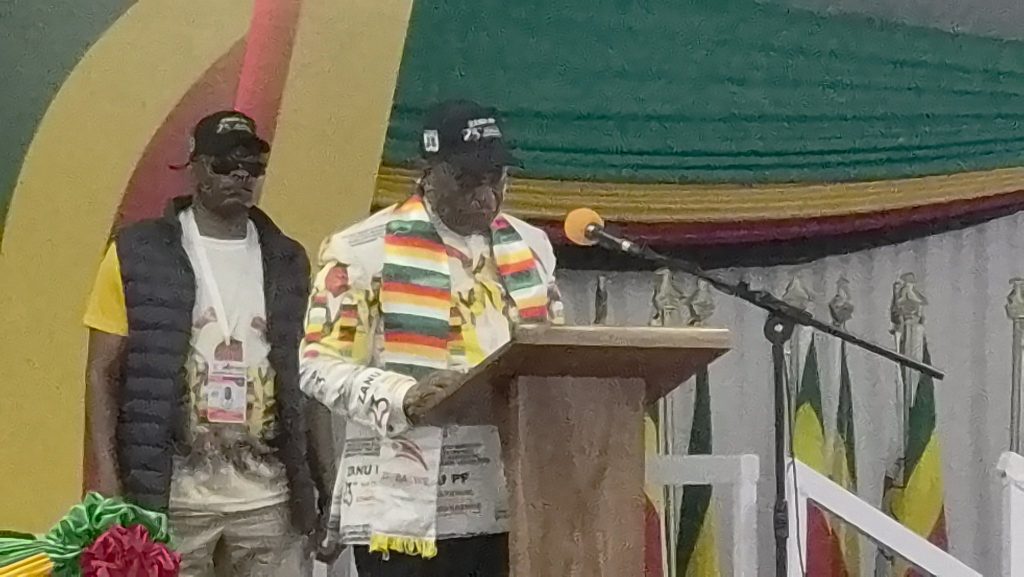
Speaking during a media briefing at the Zanu PF headquarters on Monday, party spokesperson Christopher Mutsvangwa said Mnangagwa had recently held consultations with individuals linked to influential traditional leaders in Zululand and among the Xhosa community, areas that have become focal points of anti-migrant sentiment.
“A couple of weeks ago, the President was consulting with one of the young men in South Africa who has very good connections with the traditional rulers in Zululand and Xhosa.
“This is where there is a groundswell of weaponised poverty being used against each other, to see where the traditional leadership in those regions can come in and help us deal with that situation unfolding on the ground,” said Mutsvangwa.
Mutsvangwa said the engagement followed an approach by South African traditional leaders who believed the anti-migration protests required a regional response rather than one confined within South Africa.
According to Mutsvangwa, the traditional leaders reached out to Mnangagwa because they regarded him as the region’s most senior leader with institutional memory of the Frontline States and the liberation struggles that forged Southern Africa’s solidarity.
He said discussions have progressed beyond responding to the immediate unrest, with a proposal now under consideration for a regional conference aimed at addressing migration challenges while improving Africa’s economic competitiveness.
Mutsvangwa said the proposed conference would seek not only to tackle the anti-migration crisis in South Africa but also improve the image of the Southern African region and the African continent to attract greater capital and investment, enabling countries to create new economic opportunities for their citizens.
While outlining Zimbabwe’s diplomatic engagement, Mutsvangwa stressed that Harare respected South Africa’s sovereignty.
“South Africa is still an independent country. It has got its own governance. It is a national jurisdiction.
In as much as we have certain views about how certain issues should be handled, it is still very much a national question for South Africans.
“We still believe that there is a capability by the South African government to deal with the situation. We do not want to be seen as intrusive into the internal politics of South Africa,” said Mutsvangwa.
The anti-migrant tensions have been driven by concerns among some South Africans over unemployment, pressure on public services, crime and competition for economic opportunities.
In recent months, organisations including March and March and supporters linked to the uMkhonto weSizwe Party have organised demonstrations demanding the removal of undocumented migrants.
Some protests have turned violent, resulting in attacks on foreign-owned businesses, deaths and the displacement of migrant communities, while the South African government has intensified immigration enforcement and deportation operations.
South African authorities have consistently distinguished between lawful immigration enforcement and acts of vigilantism, condemning attacks against foreign nationals while maintaining that migration management must take place within the framework of the law.
Traditional leaders have also appealed for calm. Zulu King Misuzulu kaZwelithini has publicly condemned attacks on African migrants, urging peace, unity and respect for fellow Africans.
The Congress of Traditional Leaders of South Africa (CONTRALESA) has similarly warned against violence, saying socio-economic frustrations should not be directed at migrants and that concerns should be addressed through lawful institutions rather than vigilantism.
As Zimbabwe pursues diplomatic engagement, government has also intensified efforts to assist citizens affected by the unrest.
In an update released by Presidential Spokesperson George Charamba, Zimbabwe said 58,768 citizens had returned from South Africa as of 2 July 2026. Of these, 11,065 were repatriated through government-facilitated operations, while 47,703 returned through self-repatriation.
Charamba said the Zimbabwean Embassy in Pretoria and the country’s consulates are coordinating the movement of returnees from centres including Cape Town and Durban to the Musina Temporary Repatriation Centre before they cross into Zimbabwe through Beitbridge.
The diplomatic missions are providing food, transport, temporary accommodation and other humanitarian assistance, while approximately 600 Zimbabweans were being processed at the Epping Repatriation Centre in Cape Town pending transfer to Musina.
Government has also highlighted extensive support from the private sector and humanitarian partners.
The Bridging Gaps Foundation, led by businessman Kudakwashe Tagwirei, has provided 11 buses to support repatriation efforts, while businessman E. Mupfumi and philanthropist Pedzisai “Scott” Tungwarara have contributed a further six buses.
Higherlife Foundation and Life Foundation have supplied ambulances for medical emergencies, while the World Food Programme, UNICEF, No-One Sleeps Hungry, ADRA and ARDA continue providing food, transport, blankets and other humanitarian assistance to returning Zimbabweans.
Attention is now increasingly shifting from repatriation to long-term reintegration.
In one of the first major private-sector interventions aimed at supporting returnees, the Prevail Group of Companies has announced a recruitment drive exclusively targeting Zimbabweans who have recently returned from South Africa.
The company is recruiting builders, electricians, plumbers, carpenters, concrete batchers, painters, drivers and general hands for an upcoming construction project, with eligibility limited to recent returnees.
The initiative complements government efforts to ensure that Zimbabweans returning home are not only safely repatriated but are also able to secure employment and rebuild their livelihoods.
Officials say combining regional diplomacy, humanitarian assistance and employment creation represents a comprehensive response to a crisis rooted in economic hardship, migration pressures and broader developmental challenges facing Southern Africa, with Mnangagwa’s engagement of traditional leaders forming a key pillar of efforts to restore stability and reinforce the spirit of African solidarity.