By Staff Reporter
HARARE — A renewed legal bid to place RioZim Limited under corporate rescue has reignited tensions around the diversified mining group, raising questions over whether the move reflects genuine financial distress or a strategic push by opportunistic investors seeking control of undervalued assets.
The latest application, filed at the Commercial Division of the High Court, comes barely four months after a similar attempt was dismissed.
In that earlier ruling, Justice Mandaza upheld the validity of a board resolution opposing corporate rescue proceedings, stating it met “the basic threshold” required under law.
He further rejected arguments that the company had acted inconsistently in related legal matters.
Corporate rescue, introduced under Zimbabwe’s Insolvency Act, is designed to rehabilitate financially troubled firms through court-supervised restructuring.
However, market analysts caution that the mechanism can, in certain cases, be exploited by investors aiming to acquire distressed companies at discounted valuations.
This strategy is commonly associated with so-called “vulture capital.”
The fresh application, reportedly filed by a shareholder, alleges that RioZim Limited is technically insolvent and financially distressed, seeking the appointment of a corporate rescue practitioner to oversee its affairs.
The applicant has also petitioned the Zimbabwe Stock Exchange and the Securities and Exchange Commission of Zimbabwe to intervene, including halting a proposed board process aimed at restructuring liabilities through strategic asset disposals.
This comes at a time when the mining group has been attempting to stabilise operations following a prolonged period marked by liquidity constraints, power shortages and operational disruptions.
Typical challenges that have affected much of Zimbabwe’s mining sector in recent years.
Despite the legal challenge, recent developments suggest a company in recovery rather than decline.
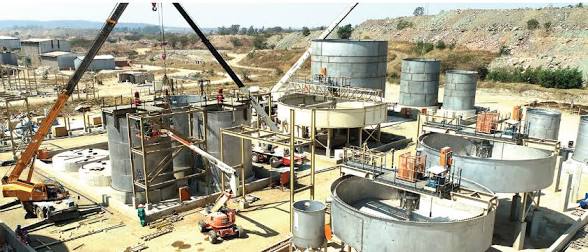
The reopening of Renco Mine, one of the group’s flagship gold operations, has been a central pillar of this turnaround.
Renco Mine has reportedly produced over 190 kilogrammes of gold since resuming operations after a capital injection aimed at restoring production capacity.
Efforts are also underway to restart Cam & Motor Mine in Kadoma, which had been placed under care and maintenance due to technical and ore-quality challenges.
RioZim’s asset portfolio,which includes gold mines such as Renco, Cam & Motor, and Dalny, alongside interests in coal and base metals, remains a key factor underpinning its valuation and investor interest.
The company’s recovery has had broader socio-economic implications, including safeguarding more than 1,200 jobs tied to its operations, at a time when Zimbabwe’s formal employment sector remains under strain.
Strong global gold prices have further supported the company’s outlook, improving revenue prospects for producers like RioZim Limited.
Analysts note that elevated prices, driven by sustained demand for safe-haven assets, have bolstered the viability of mining operations across the sector.
However, claims in the application that the company is unable to meet its financial obligations contrast with indications that it is gradually settling creditor dues and normalising salary payments.
While the motivations of those behind the latest court action remain unclear, market observers say companies emerging from distress often become prime targets for acquisition attempts, particularly in resource-rich sectors like mining.
The High Court is expected to determine whether the latest corporate rescue application meets the legal threshold, in a decision that could have broader implications for investor confidence and corporate governance in Zimbabwe’s mining industry.