By Staff Reporter
Harare — The Amalgamated Rural Teachers Union of Zimbabwe (ARTUZ), in its latest report, documented that Zimbabwe’s education sector faced deepening strain in 2025.
In the report titled “A Year of Unbroken Resistance: ARTUZ Political Report 2025 “the union accused the government of pursuing economic and legislative policies that it says have impoverished teachers, weakened public schooling, and narrowed democratic space.
The union describes the political environment as “a state at war with its people,” arguing that teachers have become casualties of what it calls deliberate policy choices rather than unintended economic decline.
ARTUZ claims the government’s approach has resulted in “the brutal extraction of wealth from the masses,” with educators forced to survive on wages the union characterises as unsustainable.
“Through starvation wages, a deliberate policy of super-exploitation, the state ensures teachers, the architects of the nation’s future, live in perpetual debt and destitution,” the report states.
ARTUZ estimates that the public education system is losing around 400 teachers per month, a trend it says has led to curriculum instability and declining learning standards, particularly in rural areas.
The union also raises alarm over proposed legislation, including the State Service Pension Bill and amendments to the Public Service Act, which it argues threaten workers’ retirement security and fundamental labour rights.
According to ARTUZ, the pension bill represents “a brazen attempt at legalized theft, seeking to confiscate our future security to plug holes created by elite corruption.”
Parliamentary legal committees have flagged constitutional concerns with some of the proposed laws, although the government has maintained that the reforms are necessary to stabilise the public service.
ARTUZ further accuses the state of engineering what it terms “privatisation by neglect,” citing schools without water, classrooms lacking syllabi and shortages of learning materials.
“By deliberately collapsing public infrastructure, the state is commodifying knowledge and entrenching class inequality from birth,” the report argues, adding that such conditions violate constitutional guarantees of access to education.
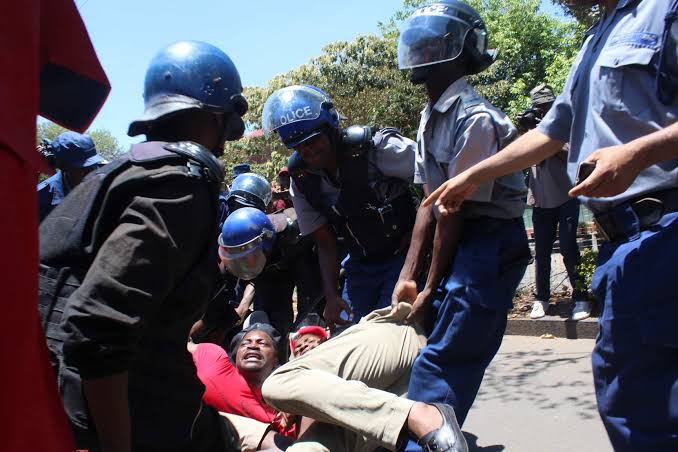
Beyond economic and policy disputes, the union alleges that 2025 was marked by repression of teachers and labour activists.
“When our legitimate dissent exposed this agenda, the state responded not with dialogue, but with abductions, illegal arrests, and torture,” ARTUZ states, naming several members it says were targeted.
Authorities have consistently denied allegations of systematic repression, saying law enforcement actions are conducted in line with the law.
In response, ARTUZ says it broadened its role beyond collective bargaining by intensifying community engagement and legal advocacy.
The report highlights parent-teacher dialogues held in districts such as Seke and Binga and the delivery of a digital library to Binga, which it describes as evidence that “resources exist, but are maliciously misdirected.”
The union also reports sustained lobbying during parliamentary hearings on contentious bills and legal challenges to arrests and labour disputes.
ARTUZ concludes by warning that tensions between teachers and the state are unlikely to ease.
“While the state holds the instruments of coercion, we hold the power of truth, organisation, and an unwavering moral cause,” the report states, declaring 2026 “a year of expanding the fighting front.”
As the government continues to cite fiscal constraints and economic reform priorities, the union’s assessment highlights persistent mistrust between educators and the state, underscoring the central role labour disputes are likely to play in Zimbabwe’s political and social landscape in the year ahead.