By Staff Reporter
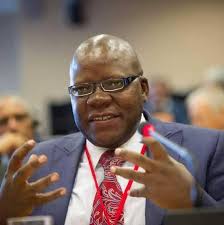
HARARE – Former finance minister Tendai Biti has strongly criticised the Mnangagwa administration’s newly enforced presumptive tax regime, cautioning that Zimbabweans are now “the most taxed people in Africa” and risk being suffocated by punitive levies.
Announced through Public Notice 51 of 2025, the Zimbabwe Revenue Authority (ZIMRA) rolled out revised presumptive tax scales for the informal sector, reaffirming provisions already enshrined in the Finance Act of 2024, gazetted on October 24 last year.
The new measures target informal traders, small-scale miners, taxi and commuter omnibus operators, driving schools, hairdressers, cross-border traders, bottle stores, and restaurants.
The taxes range from 10 percent of rentals to monthly payments of up to US$500.
For example, hairdressers are required to pay US$5 per chair per month, while cross-border traders must surrender 20 percent of the duty value of their imports.
Biti condemned the policy as “absurd” and regressive, noting that even before the rebasing of the economy, taxes accounted for 30 percent of GDP – double Africa’s average – making Zimbabwe the most heavily taxed country on the continent.
He stressed that ordinary citizens already face at least 15 different forms of taxation, including PAYE, corporate tax, VAT, the IMMT, fuel levies, carbon tax, AIDS levy, excise duties, toll fees, vehicle licences, stamp duty, customs duty, capital gains tax, council rates, and NSSA contributions.
According to Biti, government is substituting excessive taxation for genuine economic policy.
He argued that “high, regressive taxes punish working people and small businesses” by stripping away disposable incomes, which in turn fuels a broader economic crisis rooted in low accumulation and stagnation.
The opposition leader further said Zimbabwe was caught in “a vortex of self-induced contradictions,” where growth had been “sacrificed on the altar of artificial stability” through punitive taxes, tight monetary controls, and mismanagement of the exchange rate.
He called for the scrapping of levies such as the IMMT and presumptive taxes, insisting that informality cannot be eliminated by taxation.
Instead, Biti urged the state to grow a broad-based, inclusive economy by supporting start-ups and SMEs, encouraging formal registration, building databases, and promoting digitisation – reforms he noted had been advocated decades ago by economist Hernando de Soto.
“High taxes only fuel avoidance and evasion,” Biti concluded.