By Victor Fanuel
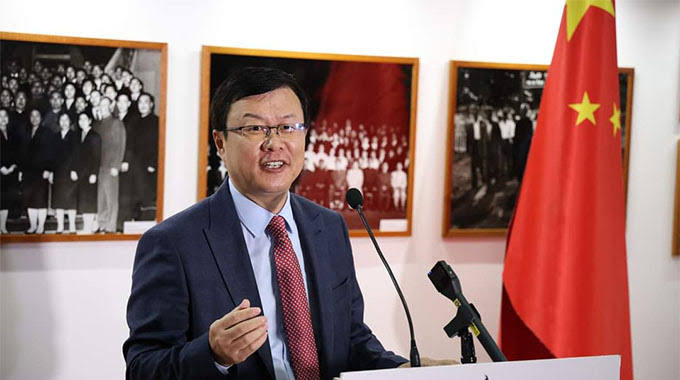
HARARE — The Embassy of the People’s Republic of China in Zimbabwe has urged Chinese mining companies operating in the country to strictly comply with local laws and carefully assess investment risks following the Government of Zimbabwe’s recent ban on the export of raw minerals and lithium concentrates.
In a public notice issued on Thursday, the embassy said the recent policy changes by Harare require investors to exercise caution and strengthen risk-management measures.
“The Government of Zimbabwe has recently suspended exports of raw minerals and lithium concentrates, and introduced new regulations concerning reserved sectors,” the embassy said.
The embassy encouraged Chinese enterprises to align their operations with Zimbabwean regulations and warned against making decisions without fully understanding the legal and policy environment.
“Prior to making investments in Zimbabwe, investors shall conduct a comprehensive and in-depth assessment of the local business environment, industrial policies and relevant laws and regulations, fully consider various investment and operational risks, and make informed decisions so as to avoid losses resulting from government policy changes,” the statement read.
The Chinese embassy also stressed that companies already operating in the country must comply with domestic laws.
“In the course of production and business operations in Zimbabwe, Chinese enterprises and nationals shall strictly abide by local laws and regulations, adopt proactive risk prevention and control measures, and protect their legitimate rights and interests through legal channels,” the embassy said.
The warning follows government’s recent decision to suspend exports of all raw minerals and lithium concentrates with immediate effect.
Government says the ban on all raw minerals and lithium concentrates aims to promote local beneficiation and curbing mineral leakages.
The Ministry of Mines and Mining Development announced that the ban, introduced in late February, will remain in force until further notice and applies to all shipments, including minerals already in transit.
Zimbabwe had previously planned to stop exports of lithium concentrates in 2027, but the timeline was brought forward as part of a broader push to ensure that more value from the country’s mineral resources is processed locally.
The policy shift has significant implications for Chinese-linked mining firms, which are among the largest investors in Zimbabwe’s lithium sector.
Companies connected to Chinese investors operate several major projects, including Bikita, Sabi Star, Kamativi and Prospect Lithium Zimbabwe, most of which have been exporting spodumene concentrate to China for further processing.
Zimbabwe, Africa’s top lithium producer, accounts for a significant share of the global lithium raw materials market, with output projected at about 7% of global supply, meaning the sudden export ban could disrupt supply chains and force investors to adjust their strategies.
The embassy’s notice is seen as a signal that Beijing wants its companies to proceed cautiously as Zimbabwe tightens control over its critical mineral resources.