By Staff Reporter
HARARE – Teachers have petitioned President Emmerson Mnangagwa to establish a US$1.8 billion public education recovery fund, warning that Zimbabwe’s 2027 National Budget falls short of the resources needed to reverse the deterioration of the country’s schools.
The Amalgamated Rural Teachers Union of Zimbabwe (ARTUZ), led by president Obert Masaraure, submitted the petition on November 24, calling for an emergency funding package covering teachers’ salaries, school infrastructure, learner grants, feeding programmes and outstanding government obligations.
“We are concerned that the 2027 National Budget fails to provide sufficient resources to reverse the deterioration of public education.
“The proposed Ministry of Primary and Secondary Education allocation is ZiG47.703 billion, a nominal increase of approximately 0.7% compared with the approved 2026 allocation,” ARTUZ said in its petition.
ARTUZ wants ordinary public education spending raised to at least 20% of total public expenditure and 6% of gross domestic product (GDP), arguing that the proposed allocations fall below internationally recognised education financing benchmarks.
Zimbabwe’s two education ministries have been allocated a combined ZiG62.747 billion, against proposed national expenditure of ZiG358.3 billion.
This represents approximately 17.5% of total spending, leaving a shortfall of about ZiG8.91 billion against the 20% benchmark used in ARTUZ’s calculations.
A separate calculation based on 6% of projected GDP puts the required education allocation at ZiG115.71 billion, leaving an indicative gap of ZiG52.96 billion.
ARTUZ says its wider recovery package would cost US$3.585 billion annually, including a proposed minimum monthly teacher remuneration package of US$1,260, universal school grants, feeding programmes and the settlement of outstanding Basic Education Assistance Module (BEAM) obligations.
“The quantified package, incorporating updated BEAM debt, extension of feeding to A Level and identified secondary vacancies, amounts to US$3.585 billion,”
“Compared with the entire proposed primary and secondary education vote of US$1.704 billion, it demonstrates an indicative funding gap of US$1.882 billion, before other outstanding demands,” the petition states.
The union, however, cautioned that the figure is an indicative measure rather than a final supplementary appropriation, saying existing programme allocations, including BEAM funding outside the education ministry, must be reconciled to avoid double counting.
One of the most pressing concerns is the reported US$300 million owed under BEAM, which supports school fees for disadvantaged children.
ARTUZ says the figure was raised during parliamentary debate on November 5 and requires urgent verification.
Treasury has allocated ZiG400 million, equivalent to approximately US$14.29 million, towards the programme in 2027.
The union argues that even if the entire allocation were channelled towards outstanding obligations, it would cover less than 5% of the reported debt, leaving little room to assist new beneficiaries.
School feeding is another major funding concern, with the proposed ZiG1 billion allocation falling significantly below the estimated US$420.4 million required to provide one nutritious meal daily to every learner from Early Childhood Development to A-Level.
At US$0.50 per meal over 180 school days, ARTUZ estimates that an additional US$384.69 million would be required to finance universal feeding.
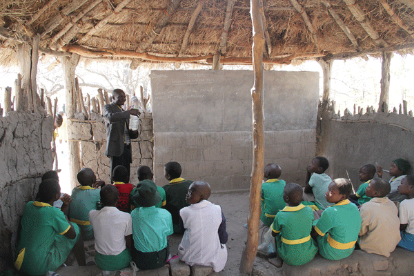
The petition also calls for a three-year infrastructure programme to address a reported national shortage of approximately 1,800 schools, alongside new classrooms, science laboratories, libraries, sanitation facilities and teacher accommodation.
Beyond the financial demands, ARTUZ has invoked Zimbabwe’s obligations under the African Charter on the Rights and Welfare of the Child, which the country ratified in January 1995.
Article 11 of the charter guarantees every child the right to education and requires State parties to take appropriate measures to provide free and compulsory basic education, progressively make secondary education free and accessible, and reduce school dropout rates.
However, the charter does not prescribe a specific percentage of national expenditure that governments must allocate to education.
The 20% public expenditure and 6% GDP benchmarks cited by ARTUZ instead draw on the international Education 2030 financing framework, which urges governments to allocate between 15% and 20% of public expenditure, or 4% to 6% of GDP, to education.
On the figures contained in the 2027 Budget, Zimbabwe’s combined education allocation falls below both upper thresholds and is also below the lower 15% public expenditure benchmark only if calculated differently; at approximately 17.5%, it falls within the recommended spending range.
ARTUZ is proposing that the recovery fund be established under Section 18 of the Public Finance Management Act, with parliamentary oversight, independent audits and quarterly publication of revenue and expenditure.
To finance the proposal, the union has suggested a 2% contribution on qualifying mineral sales by large mining groups, a 10% levy on exceptional mining profits, a corporate education contribution and progressive wealth and high-income surcharges.
It estimates that some of the proposed revenue measures could generate approximately US$199.2 million annually after allowing for collection and implementation risks, although it acknowledges that these measures alone would not close the funding gap.
The union has urged Mnangagwa to direct the Finance and Primary and Secondary Education ministers to undertake a joint costing exercise, verify outstanding BEAM obligations and consider revised or supplementary budget estimates before the 2027 appropriations process is concluded.
It also wants a written response from Government and an opportunity to discuss implementation of the proposed recovery programme.