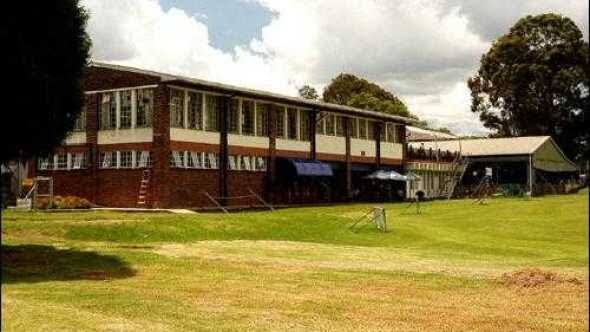
By Staff Reporter
HARARE — Falcon Golf Club has launched a two-track legal offensive in the High Court of Zimbabwe, challenging the legality of a military cantonment declaration over its leased land while simultaneously demanding immediate restoration of possession following a forceful military takeover.
The community-owned golfing facility, which has occupied the land under a 99-year lease with the City of Harare since June 1971, filed its review application under Case No. HCH 5002/26 on 2 November and its spoliation application under Case No. HCH 5010/26 on 5 November.
Both applications stem from Statutory Instrument 28 of 2026, which declared the property a cantonment on 13 February 2026 — a decision Falcon Golf Club says it only became aware of on 5 September 2026, the same day armed military personnel moved in to seize the premises.
In its review application filed on 2 November, Falcon Golf Club argued that the statutory instrument was fatally defective because it cited the wrong section of the Defence Act.
Falcon Golf Club argued that “Statutory Instrument 28 of 2026 was therefore not validly made under section 89, considering the express reference to section 87.
The statutory instrument cannot derive legal validity merely from the Minister’s general authority; it must be made pursuant to the correct empowering provision.
If section 87 does not confer the power exercised, there is an arguable ultra vires challenge. The legal basis upon which SI 28 of 2026 was made is missing.”
Falcon Golf Club further argued that the cantonment declaration was tainted by malice and ulterior motive, submitting that the land was seized for the military’s social recreational purposes rather than any genuine defence requirement.
According to the review application, “the land was forcibly grabbed by (defence minister Oppah Muchinguri-Kashiri) the 1st Respondent for social recreational purposes of the military with no sympathy on the Applicant and its membership and workforce who also had an interest in the land and in addition to occupying the land openly for fifty-five (55) years they had effected improvements on the land.”
Falcon Golf Club submitted that taking land from citizens under the guise of cantonment simply for the military to play golf is not what a genuine cantonment is designed for.
The review application also contended that the declaration infringed constitutional property rights under sections 2, 68 and 71.
Falcon Golf Club argued that “the real question is: “Can the Minister, by merely declaring Applicant’s leased land to a military cantonment, extinguish or override Applicant’s existing 99-year leasehold rights without following the constitutional and statutory requirements applicable to compulsory deprivation or acquisition of property?”
The club maintained that section 89 of the Defence Act does not constitute an acquisition provision and that a lease itself is property protected by section 71.
In its separate spoliation application filed on 5 November, Falcon Golf Club sought urgent restoration of possession, invoking the common law remedy that requires anyone who has been forcibly dispossessed of property to be restored to it before any other legal questions are considered.
The club’s legal team, led b L Ziro of Takaindisa Law Chambers, argued that the military’s forceful dispossession between 5 and 12 September 2026 occurred without any court order.
From the spoliation application, Falcon Golf Club argued that “none of the Respondents acted according to an order of court nor were any of their actions of forcefully dispossessing Applicant of its possession of its stands legal.”
Relying on Supreme Court authority in Minister of Mines and Mining Development and Others v Grandwell Holdings (Private) Limited and Others SC 34/18 and Botha & Anor v Barrett 1996 (2) ZLR 73 (S), the club submitted that the lawfulness of its possession is irrelevant in spoliation proceedings.
The club argued in the spoliation application that “the idea behind spoliatory relief has been emphasized in case law, it is there to prevent chaos in society and prevent citizens employees and organs of State from taking the law into their own hands to enforce evictions, similar to what occurred in this case.”
Falcon Golf Club maintained that its lease has neither been cancelled nor compulsorily acquired, and that the cantonment notice did not constitute a court order for eviction.
The respondents, represented by Mafongoya and Mutapura, have raised preliminary points including alleged non-compliance with the State Liabilities Act, approbation and reprobation, and material disputes of fact.
Falcon Golf Club dismissed these as frivolous, arguing that the prior urgent application HCH 4662/26 was simply withdrawn to correct procedural errors and was never determined on the merits.
Both matters await adjudication in the High Court, with Falcon Golf Club seeking an order setting aside the cantonment declaration and restoring its possession of the golf club premises pending final determination of the review application.