By Victor Fanuel
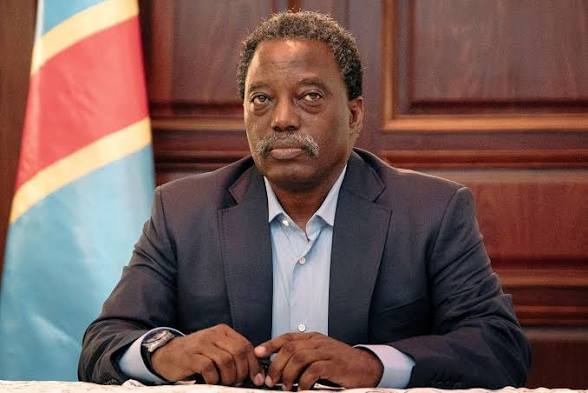
HARARE — Joseph Kabila’s dramatic return to the political battlefield has sparked fears of a fresh regional crisis, with a new politico-military alliance threatening to derail peace efforts in the Democratic Republic of Congo (DRC).
The former Congolese president Kabila announced the formation of the Front pour la Refondation de la Nation (FRN) on October 12, 2026, in a move that could transform the conflict in the country’s troubled east into a wider struggle over national power and political legitimacy.
Replacing the AFC/M23 grouping, the new coalition reportedly names Nangaa, Bisimwa, Makenga andKaniki as Kabila’s deputies. Its formation comes justover a year after Kabila was sentenced to death inabsentia for treason in September 2025, amidallegations of supporting AFC/M23.
Now, analysts warn that his return could place the already fragile mediation efforts led by the Southern African Development Community (SADC) and the East African Community (EAC) under severe pressure.
In a new brief published on October 23, the Southern Africa Centre for Mediation and Extremism Prevention (SACMEP) warns that Kabila’s political comeback risks turning the eastern DRC conflict from a localised rebellion into a national legitimacy crisis with dangerous regional consequences.
The report by SACMEP, titled The Impact of Joseph Kabila’s Political Return on SADC–EAC Conflict Mediation in the DRC: What SADC Should Do to Preserve Peace?, identifies three immediate threats: the fragmentation of peacenegotiations, defections within the Congolese armed forces and a possible escalation of tensions involving Rwanda.
SACMEP argues that the emergence of the FRN fundamentally changes the political calculations surrounding the conflict, forcing regional leaders to reconsider who should be included in negotiations and how a lasting settlement can be achieved.
The report states: “The FRN transforms the eastern DRC conflict from a localized rebellion into a national legitimacy crisis by creating a new, unavoidable actor in an already fragmented mediation system.”
It warns that treating the new alliance merely as a rebranded AFC/M23 would risk reducing a deeply political crisis to a military problem.
Kabila’s return also threatens to complicate several parallel diplomatic initiatives, including the Doha process, US-led mediation and the merged Luanda–Nairobi framework.
According to SACMEP, bringing the FRN into the negotiations could reopen contentious questions over ceasefire arrangements, disarmament and political inclusion, potentially delaying the implementation of existing agreements.
The report further warns that competing interests among regional mediators could deepen divisions, particularly as some EAC members have historically viewed Kabila as more accommodating on regional security issues than current President Félix Tshisekedi.
By contrast, countries including South Africa and Angola have invested politically in Tshisekedi’s leadership.
Such competing loyalties could revive regional rivalries reminiscent of the 1998–2003 Congo wars, when neighbouring states supported opposing sides in the conflict.
Kabila’s return follows years of deteriorating political relations in the DRC, including the collapse of the 2019–2020 power-sharing coalition and controversy surrounding Tshisekedi’s post-2024 constitutional reform agenda, which critics perceive as a possible attempt to extend his stay in power.
SACMEP argues that the death sentence against Kabila and the removal of his immunity further reduced incentives for political compromise, potentially leaving armed confrontation as a more attractive option for his survival than negotiations.
The report also points to a security vacuum in eastern Congo following the withdrawal of the East African Community Regional Force in 2023 and the SADC Mission in the DRC in 2025.
That vacuum, it argues, has increased the strategic importance of Goma and created opportunities for armed groups to consolidate their influence.
The stakes are particularly high because the conflict is driven not only by political rivalries but also by disputes over land, mineral wealth and foreign intervention.
SACMEP warns that the FRN’s influence over mineral-rich border areas could strengthen the war economy and make it harder to achieve a durable settlement.
The organisation is urging SADC to abandon an approach centred primarily on military support and instead prioritise political mediation.
It says the regional bloc should urgently engage both Kabila and Tshisekedi to bring the confrontation back to the negotiating table.
The report calls for an immediate harmonisation of the Doha, US and Luanda–Nairobi mediation processes into a single contact group with a common position on the FRN’s status.
It also recommends that SADC conduct an urgent strategic review of its former military mission, SAMIDRC, and consider redirecting part of its budget towards diplomatic engagement and shuttle mediation.
Under Article 11 of the SADC Protocol on Politics, Defence and Security Cooperation, the bloc is expected to prioritise peaceful approaches to regional crises, including preventive diplomacy, negotiation, conciliation and mediation.
SACMEP argues that this framework provides a basis for shifting the focus away from military confrontation and towards a negotiated political settlement.
The organisation further recommends that SADC deploy confidential envoys to engage Kabila, the FRN, Rwanda and Tshisekedi, while providing credible security assurances to encourage dialogue.
It says guarantees of safe passage and protection against arbitrary prosecution could help create the conditions for Kabila to participate in negotiations, while constitutional safeguards could address concerns surrounding Tshisekedi’s reform agenda.
The report also urges regional leaders to tackle the humanitarian and security vacuum in Goma through community outreach, disarmament, demobilisation and reintegration programmes, as well as inter-community dialogue.
It argues that mineral traceability and revenue-sharing arrangements should be addressed early in negotiations to prevent armed actors from consolidating control over lucrative resources.
Preserving its credibility as a defender ofconstitutional order without becoming furtherentangled in the DRC’s internal conflict remains akey challenge for SADC.
SACMEP’s central warning is that the window for a purely military solution has closed, and that excluding Kabila from political engagement could deepen the crisis rather than resolve it.
With a new alliance emerging and regional interests increasingly at odds, the future of the DRC peace process may depend on whether African leaders can overcome competing loyalties and agree on a common diplomatic strategy.