By Victor Fanuel
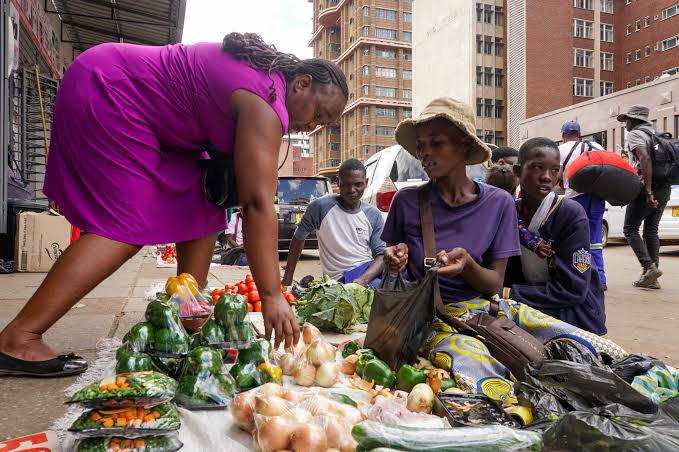
HARARE — We The People, through its self-styled People’s Parliament, is pressuring Local Government and Public Works Minister Daniel Garwe to suspend a September 9 deadline for the eviction of informal traders from undesignated trading sites, arguing that government has not provided enough alternative vending spaces.
The pressure group’s Social Services, Labour and Informal Economy Committee submitted its lobbying document to Garwe on Thursday, saying it was acting on behalf of “informal traders, micro-entrepreneurs, street vendors, and night market operators” across Harare Metropolitan Province and other urban settlements.
Committee chairperson Thembakhuye Moyo and secretary Tafadzwa Kutya signed the document on behalf of We The People.
The lobbying follows Garwe’s September 2 directive ordering vendors operating from undesignated sites to vacate by September 9 ahead of a “comprehensive, zero-tolerance clean-up operation.”
Government says the operation, which will begin in Harare and Greater Harare before being rolled out to other urban areas, is intended to restore order, improve sanitation, clear pedestrian pathways and ease congestion.
Garwe said informal trading was recognised as a livelihood but had to take place within municipal by-laws and at legally designated marketplaces.
We The People says the September 9 deadline is unrealistic because there are insufficient designated markets to accommodate the thousands of traders who would be displaced.
“With absolute respect, We The People state clearly that these legally protected, designated spaces do not exist in sufficient quantities to accommodate the tens of thousands of citizens currently vending across our cities,” the lobbying document says.
The group argues that the traders it represents are not resisting formalisation but are seeking lawful spaces from which to earn a living.
“We do not vendor on street corners out of defiance, lawlessness, or a desire to obstruct traffic.
“We actively seek to be registered, to pay municipal market fees, to obey health regulations, and to trade inside designated, sheltered, and serviced markets,” said the group.
We The People says ordering traders to relocate to spaces that do not exist would leave thousands of families without an income.
“Demolishing our modest structures without providing viable, alternative sites will instantly plunge thousands of honest families into absolute destitution,” the group says.
We The People also invoked constitutional provisions relating to work, human dignity, freedom of trade and public participation, arguing that enforcement should be accompanied by measures that allow informal traders to transition into the formal economy.
The group says government’s approach should also be measured against the National Development Strategy 2 and Vision 2030, arguing that informal trading has become a survival mechanism in an economy where formal employment opportunities remain limited.
“We are vending on the streets precisely because the formal jobs promised under Vision 2030 and NDS2 have not yet materialized at scale,” it says.
The pressure group rejected the characterisation of informal trading as a source of social disorder, saying vendors were contributing to household incomes and the wider economy.
“We are the hard-working majority of Zimbabwe,” it says.
It also called for dialogue between government, local authorities and vendor representatives before enforcement begins.
Among its proposals is a joint taskforce to identify, survey and develop decentralised trading sites, alongside an immediate registration exercise allowing traders to obtain temporary operating permits while permanent infrastructure is developed.
We The People is also proposing that regularisation be funded through vendor contributions, redirected enforcement budgets and philanthropic support.
The group wants Garwe to suspend the September 9 deadline and impose a minimum 90-day moratorium on evictions and demolitions.
We The People’s lobbying comes after the Vendors Initiative for Social and Economic Transformation (VISET) also raised concerns over the government’s crackdown, warning that removing traders without viable alternatives could undermine the country’s informal economy formalisation programme.
VISET said formalisation should not simply mean removing people from existing trading locations, but should create “pathways for informal traders to transition into safer, more secure and sustainable forms of economic activity.”
Government has maintained that vendors must comply with municipal by-laws and operate from designated sites.
It remains unclear how many designated trading spaces are currently available to accommodate all traders affected by the September 9 deadline.