By Victor Fanuel
HARARE — President Emmerson Mnangagwa allegedly dismissed concerns raised by retired military commanders and former senior government officials over the controversial Constitutional Amendment Bill No. 3 (CAB3), telling them, “whoever wins, wins.”
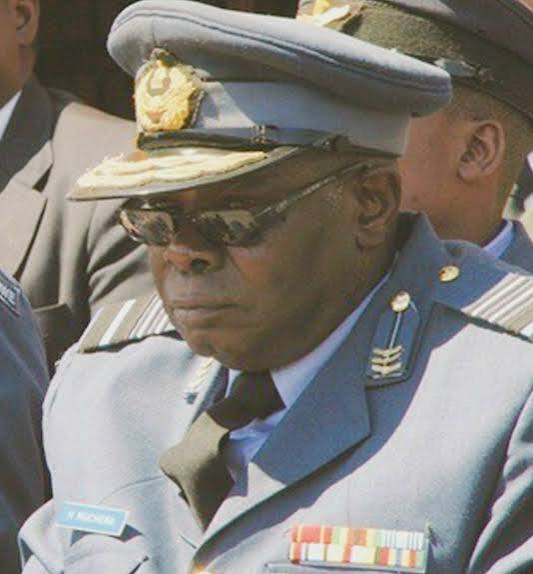
The claim is contained in a strongly worded statement issued Tuesday by retired Air Marshal Henry Muchena on behalf of a group of retired generals and former senior civil servants, as Parliament begins considering the constitutional amendment that has triggered one of the biggest political and legal battles of Mnangagwa’s presidency.
According to the group, they met Mnangagwa on May 18 and 19 in a last-ditch effort to persuade him to abandon the proposed amendments or subject them to a national referendum.
“When we placed before the President (Mnangagwa) our caution regarding the dangers of this constitutional amendment, chief among them the alienation of the citizenry from the constitutional order and eventual alienation of our membership in Zanu PF, his response was, in his own words, ‘whoever wins, wins’,” said Muchena.
“That response speaks for itself.
“It lays bare the contempt with which the constitutional concerns of citizens and members of our party are regarded at the highest level of executive authority,” added Muchena.
The remarks by the retired military commanders and former senior government officials came on Tuesday, the same day Justice, Legal and Parliamentary Affairs Minister Ziyambi Ziyambi formally tabled CAB3 in the National Assembly, paving the way for its Second Reading and debate.
CAB3 has become one of the most contentious constitutional proposals since the adoption of Zimbabwe’s 2013 Constitution.
Critics argue that the Bill seeks to fundamentally alter the country’s democratic framework by extending presidential and parliamentary terms from five years to seven years while also introducing provisions that would see future Presidents elected through Parliament rather than by direct popular vote.
Opponents contend that the amendments could effectively prolong Mnangagwa’s political influence beyond the limits envisioned by the current Constitution, although government insists the reforms are meant to improve governance and ensure policy continuity.
Muchena, who addressed journalists in Harare when the Bill’s parliamentary process began, reiterated calls for the proposed amendments to be subjected to a referendum, arguing that constitutional changes of such magnitude require direct approval from citizens.
In Tuesday’s statement, the retired generals claimed Parliament’s public consultation process was manipulated and failed to reflect the views of ordinary Zimbabweans.
“We state without equivocation that the said process was choreographed, imposed upon the people, and its outcomes do not in any manner reflect the genuine will of the people,” said Muchena.
The group accused Mnangagwa of being both “the principal architect and the principal beneficiary” of the constitutional amendment process.
“What became unambiguously clear from those engagements is that the welfare of the party and the wellbeing of the people are no longer the primary considerations driving this process.
“It has therefore become clear that the President (Mnangagwa) is both the principal architect and the principal beneficiary of CAB3,” said Muchena.
In an escalation of their criticism, the former military commanders warned Zimbabweans against what they described as a “personal and political project of a cabal.”
“Zimbabweans should not be deceived. CAB3 is a personal and political project of a cabal. Its passage serves narrow individual interests, not the national interest,” they said.
The statement also revealed that constitutional challenges against CAB3 are already before the Constitutional Court, with the group expressing confidence that the judiciary will act as “the last institutional line of defence” of Zimbabwe’s constitutional order.
The retired officials further threw their weight behind legal actions reportedly filed by voters against Members of Parliament in their constituencies over support for the Bill.
“We stand in full and unequivocal solidarity with every voter who has taken the constitutionally courageous step publicly or otherwise of challenging their Member of Parliament on the possibility of CAB3,” they said.
The group also made a series of corruption allegations surrounding the passage of the Bill, including claims that large sums of money and vehicles were being used to secure political support for the amendments.
However, they did not provide documentary evidence to support the allegations, and the individuals named in the statement had not publicly responded at the time of publication.
The latest intervention by retired military figures highlights growing unease within sections of Zimbabwe’s liberation movement establishment over the proposed constitutional changes.
With Zanu PF commanding the parliamentary numbers required to amend the Constitution, attention is now shifting to both the courts and Parliament, where lawmakers are expected to begin substantive debate on CAB3 this week.
For the first time since the constitutional amendment process began, opposition to the Bill is no longer coming solely from opposition parties and civil society groups, but also from former senior state officials and retired security chiefs who once formed part of the ruling establishment itself.