By Victor Fanuel
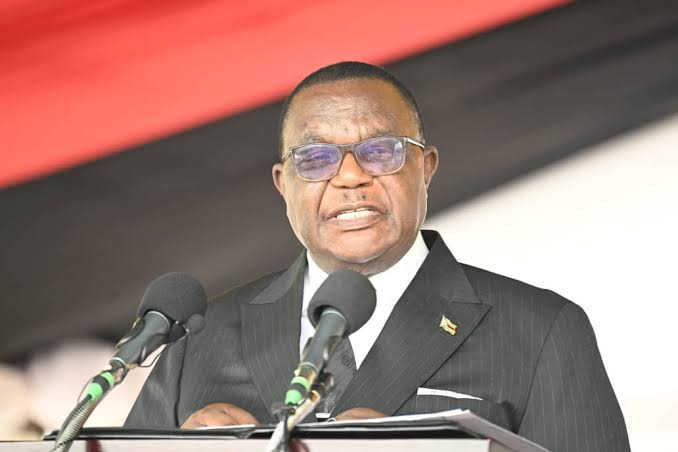
HARARE — Vice President Constantino Chiwenga delivered what appeared on the surface to be a spiritual address at a Roman Catholic Church event in Murewa on Saturday.
However, his choice of scripture carried unmistakable political resonance against the backdrop of President Emmerson Mnangagwa loyalists’ push to amend the constitution in ways that could extend Mnangagwa’s hold on power.
Extolling the virtues of Saint Francis of Assisi, Chiwenga urged leaders to embrace “humility, radical simplicity, peace-building and compassionate outreach to the most vulnerable,” qualities he described as forming “a balanced leadership framework.”
He then turned to the Book of Isaiah and the story of King Hezekiah.
“When God asks you to do something, never question why. Why has God done this?”
Chiwenga, a Catholic, told the congregation.
“Hezekiah reigned over Judah for a very long time and became a very prominent king.
He began to see himself as not fit for death and thought he was supposed to reign over Judah forever.”
Chiwenga said God sent the prophet Isaiah to warn Hezekiah that his time was up, that he had only a few days to live, and that he must put his affairs in order. But the king refused to accept it.
“Hezekiah would have none of it, banging on the walls of the palace: ‘What kind of a God are you? There is no other king who can reign like me.’”
God eventually relented and granted Hezekiah 15 more years, but the extension proved disastrous.
The king, his judgement clouded, exposed his kingdom’s military secrets to envoys from Babylon, who later returned to destroy him.
“He never managed even three months of the extended period,” Chiwenga said.
“He spent the extended 15 years in ruin. God did not take away the 15 years; he allowed him to have them, but he suffered the consequences.”
The parable landed with particular resonance in the wake of the tabling of the Constitutional Amendment No.3 (CAB3) in Parliament.
The bill introduces sweeping changes that would fundamentally reshape the country’s political architecture in ways critics say benefit Mnangagwa and potentially neutralise rivals, including Chiwenga himself.
One of the most dramatic provisions abolishes the direct election of the president by popular vote.
Instead, the president would be elected by members of Parliament sitting in a joint session of the Senate and National Assembly.
To win, a candidate would require more than half of the valid votes cast by MPs.
The bill also alters provisions on automatic succession by the vice president in the event of the president’s incapacitation, resignation, or death—effectively narrowing the pathway to the top office for Chiwenga and Kembo Mohadi, Mnangagwa’s two deputies.
Chiwenga, a former Zimbabwe Defence Forces commander widely regarded as a co-architect of the November 2017 military intervention that brought Mnangagwa to power, has long been viewed as a potential successor.
The amendment significantly dims that prospect, with political analysts warning that presidential succession could become subject to intense political bargaining within Parliament.
The bill further proposes extending both presidential and parliamentary terms from five years to seven.
Lawyers and opposition parties have argued that the change is unconstitutional without a referendum, particularly if it benefits sitting officeholders.
The memorandum accompanying the bill argues the reforms are intended to reduce “election-mode toxicity” and allow “sufficient time for project implementation.”
Mnangagwa’s current term runs to 2028, and he is constitutionally barred from seeking another term.
His supporters insist the amendments do not violate term limits but merely restructure governance timelines.
The bill also proposes increasing Senate seats from 80 to 90, with the president empowered to appoint 10 additional senators chosen for “professional skills and other competencies,” further strengthening executive influence over the upper chamber.
Members of Parliament are expected to vote on the bill in late May, after which it would proceed to the president for assent.