By Victor Fanuel
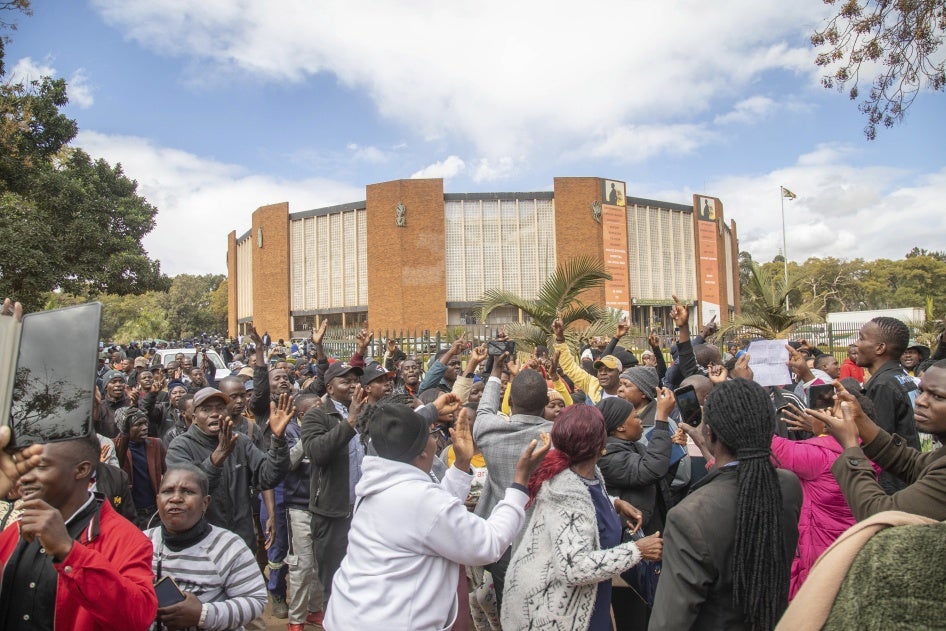
HARARE – A broad coalition of civic groups, workers, students, women, war veterans, faith-based organisations, professionals and Zimbabweans in the diaspora has rejected Constitutional Amendment Bill No. 3 (CAB3), demanding that any proposed constitutional changes be subjected to a national referendum.
In a communiqué issued following the People’s Summit held in Harare on Saturday, delegates declared that the Constitution remains “the supreme expression of the people’s will” and warned against any attempts to alter it through what they described as manipulation and inadequate public participation.
“We, the people, reject CAB3 in its current form because it threatens constitutional democracy, accountable governance, the separation of powers, gender equality, and the democratic gains secured through decades of struggle and sacrifice,” the communiqué reads.
The summit brought together representatives from labour movements, civic organisations, student groups, socialists, rural communities and constitutional advocacy groups to deliberate on the implications of the proposed constitutional amendment.
Participants argued that CAB3 could weaken democratic safeguards and consolidate executive authority at the expense of constitutional checks and balances.
“Our Constitution is more than a legal document. It is our national covenant, forged through sacrifice, struggle, dialogue and hope,” the delegates said.
A major point of contention was the manner in which parliamentary public consultations on CAB3 were conducted.
The summit accused authorities of presiding over a flawed process characterised by intimidation and violence.
“We expressed deep concern over the manner in which public consultations on CAB3 were conducted and represented by Parliament. They were marred by violence, intimidation, kidnappings and death threats,” the statement said.
The gathering also challenged official claims regarding public submissions on the bill, describing them as misleading.
“We are outraged by the government’s fabricated claim that, out of more than 500,000 public submissions, only a mere 3,000 objections were recorded. Statistically and logically, this is a gross distortion,” the communiqué stated.
Delegates insisted that if the government is confident that the proposed amendments enjoy public support, it should subject the matter to a referendum.
“If there exists genuine confidence that the proposed amendments enjoy overwhelming public support, then the most democratic path remains clear – allow the people themselves to decide through a free and fair national referendum. Truth fears no scrutiny,” the summit resolved.
Beyond constitutional issues, participants linked the debate around CAB3 to Zimbabwe’s economic challenges, including poverty, unemployment and inequality.
The summit noted that despite the country’s vast mineral wealth, millions of Zimbabweans continue to face economic hardship.
“At a time when millions of Zimbabweans are subjected to abject poverty, unemployment, inadequate public services and growing inequality, our national priorities should focus on improving livelihoods, creating opportunities, strengthening healthcare and education, and ensuring that the country’s abundant natural resources benefit all citizens,” the communiqué said.
Delegates also rejected austerity measures, corruption and what they termed “anti-working people economic policies”, while calling for greater transparency and accountability in the management of public resources.
The summit also expressed opposition to proposals that could affect constitutional bodies tasked with protecting human rights and gender equality.
“We therefore reject the proposed dissolution of the Zimbabwe Gender Commission,” the delegates said.
Participants further called for the immediate release of several student leaders currently detained following protests linked to CAB3 public hearings.
The communiqué paid tribute to Zimbabwe National Students Union leaders Emmanuel Sitima, Liberty Hamauswa, Takunda Mhuka, Richard Nyamande, Dylan Chisenwa and Takunda Mareverwa, describing their detention as an attempt to suppress democratic participation.
“We demand their immediate and unconditional release,” the summit said.
Among its key resolutions, the People’s Summit resolved to reject CAB3 in its entirety, demand a free and fair referendum on all proposed constitutional amendments, strengthen civic education on the bill, and build a broad-based movement to resist its enactment.
The gathering also committed itself to defending democratic rights, supporting economic justice, promoting environmental protection, and continuing what it described as lawful and peaceful civic engagement until concerns surrounding CAB3 are addressed.
“We call upon all Zimbabweans to stand together in defence of the Constitution, democracy, justice and national dignity.
“This is not a struggle for politicians alone. It is the responsibility of every citizen who believes in freedom, accountable governance and the future of our Republic,” the communiqué concluded.
CAB3 has emerged as one of the most contentious political issues in Zimbabwe, drawing sharp divisions between its supporters and critics over its potential impact on constitutional governance and democratic accountability.